
Summary
Total darkness at night is not optional if you want consistently deep, restorative sleep. Darkness drives melatonin secretion, stabilizes circadian timing, supports REM and slow wave sleep continuity, and improves next day cognition and mood. Even ordinary room light before bed can suppress melatonin and delay its onset. Blue weighted light is especially potent. A practical darkness protocol pairs low evening light with a true blackout solution. A contoured sleep mask such as the Nidra Total Blackout Mask creates repeatable darkness at home, on planes, and in hotels, which helps you fall asleep faster and wake sharper. Key actions: reduce light 2 hours before bed, avoid bright screens near your eyes before lights out, and use a contoured blackout mask to eliminate residual light leakage. Evidence based sources are cited inline and listed at the end.
Introduction
Your professional performance depends on stable focus, emotional steadiness, and quick problem solving. These are not solely traits. They are outputs of a well timed biological clock and consolidated sleep. The strongest input to that clock is light. Darkness is the nightly signal that starts melatonin secretion and prepares your brain for sleep. Miss the darkness signal and your internal clock drifts. You fall asleep later, wake more often, and feel flat the next day.This article explains, in practical terms, why darkness is a non negotiable part of high performance recovery. You will learn how evening light suppresses melatonin, why REM and slow wave sleep benefit from a true blackout, and how to implement a simple, portable protocol that fits a demanding schedule. You will also see where a contoured mask like the Nidra Total Blackout Mask belongs in the stack, especially for travel and shared bedrooms.
How darkness regulates melatonin and circadian timing
Melatonin is your body’s biological night signal. It rises in the evening when light levels fall,peaks during the night, and falls toward morning. This rhythmic secretion is not decorative. It coordinates the timing of sleep with the rest of your physiology. Classic laboratory work shows that typical indoor room light in the hours before bed suppresses melatonin and shifts the timing of its onset. In one controlled study, standard room lighting delayed melatonin onset in 99 percent of participants and shortened the duration of melatonin secretion compared with dimlight. That change matters because it compresses the biological night and can fragment sleep [[Gooley 2011]] .
Short wavelength light, perceived by intrinsically photosensitive retinal ganglion cells, is particularly effective at suppressing melatonin. Dose response studies demonstrate that higher blue weighted irradiance produces stronger suppression and greater phase shifting in humans [[West 2011]] . A 2025 mechanistic review further describes how light at night drives retinal signals that reactivate the central pacemaker and clamp down on melatonin synthesis, which helps explain why even brief or modest exposure can have outsized effects on timing [[Yuan 2025]] .
The practical translation is simple. Treat light as a drug with timing, dose, and spectrum. In the morning, bright outdoor light anchors your clock. In the evening, reduce both intensity and blue content so that melatonin can rise on time.
Why true blackout improves REM, memory, and mood regulation
Deeper sleep is not about unconsciousness. It is about architecture. A typical night cycles through non REM and REM stages. REM rich sleep contributes to memory processing and emotional regulation that you will rely on during hard days. Expert overviews emphasize that good sleep continuity helps you obtain sufficient REM across the night, and that stable routines improve architecture quality [[Harvard Health, REM overview 2024]] . Additional summaries note that REM supports the integration of newly consolidated memories with existing knowledge, which is useful for learning, strategy, and complex judgment [[Harvard Health, memory 2021]] .
What disrupts this architecture? A common culprit is stray light that reaches the eyes while you are drowsy or half awake. Light at the wrong time tells the brain that day has returned, increasing alerting signals and making it harder to re enter deeper stages. Eliminating small leaks along the nose bridge or mask edges protects the continuity that REM and slow wave sleep require.
The performance case for darkness for busy professionals
If you negotiate, present, lead teams, or juggle cross time zone work, you need stable energy,steady mood, and quick working memory. Those are downstream of consolidated sleep.Darkness is not a wellness aesthetic. It is a tool for better next day performance.
Consider a simple scenario. You answer messages on a phone up close to your face at 10:45 p.m. The bright blue weighted light suppresses melatonin and shifts timing [[Harvard Health, blue light 2024]] . You fall asleep later, perhaps wake in the early morning hours, and then relyon caffeine to compensate. That is a solvable problem. Dim the environment earlier, push screens farther from your eyes, and add a true blackout mask at lights out so that residual room or street light cannot reach your eyelids.
Practical blackout strategies that work at home and on the road
This section gives you a step by step protocol. Each step is designed to be repeatable, measurable, and easy to carry into travel weeks.
1. Set a light curfew. Two hours before target bedtime, reduce overhead fixtures and switch to warm, low level lamps. Most adults benefit from a consistent pre sleep routine and comfortable, dark environment [[Harvard Health, sleep hygiene 2025]] .
2. Push screens farther away. The closer a phone or tablet is to your eyes, the higher the retinal illuminance. If evening work is unavoidable, place screens at arm’s length, enable night shift or equivalent, and set brightness as low as comfortable. Prioritize text based tasks over video.
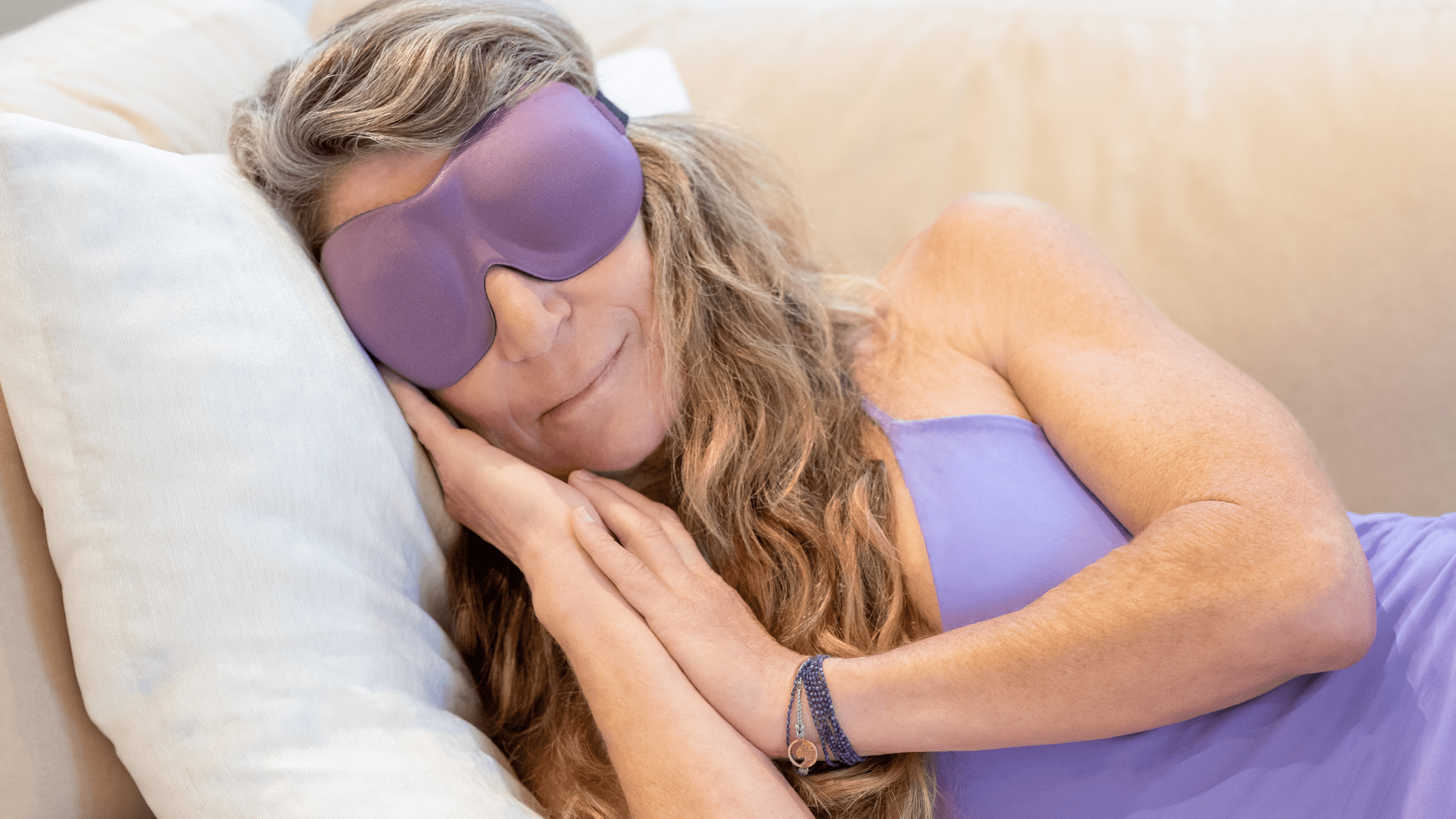
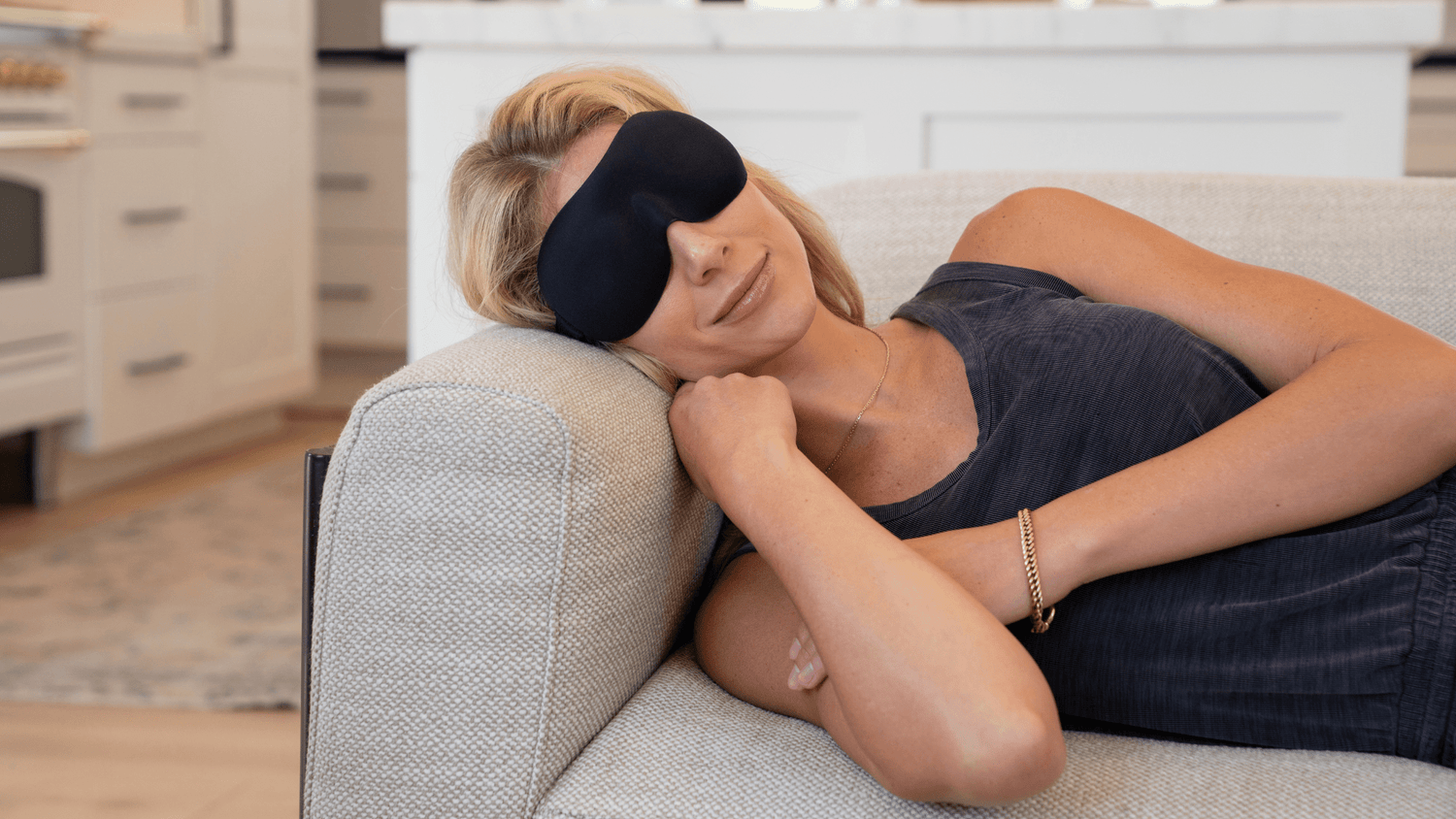
3. Use portable, guaranteed darkness. Curtains help, but they fail in hotels and rentals. A contoured mask such as the Nidra Total Blackout Mask provides reliable darkness on demand. The molded eye cups avoid pressure on eyelids and lash extensions and seal against side leakage. That combination allows you to fall asleep while a partner reads, or to sleep in after a red eye when early daylight would normally wake you.
4. Anchor the morning. Get outdoor light within an hour of waking for 15 to 30 minutes when feasible. Consistent schedules and daytime habits help optimize sleep at night [[Harvard Health, sleep hygiene 2025]] .
5. Protect your bedroom from micro leaks. Cover LED indicators on chargers. Move bright displays out of line of sight. If the room still leaks, keep the mask on as a redundancy.
6. Travel specific moves. On eastbound trips, shift bedtime earlier by small increments for a few days before departure if schedule allows. On arrival, seek morning light and avoid late night exposure. On westbound trips, seek later day light and use the mask to sleep past early dawn. Public health and travel medicine guidance recommends strategic timing of light and sometimes melatonin for faster adaptation [[CDC Yellow Book 2025]] . The mask is the simplest way to enforce darkness at the wrong time.
Darkness and hormone balance: what is supported, what is hype
You will encounter sweeping claims about light and hormones. Here is the evidence based view.Melatonin. The link between darkness and melatonin is robust. Room light before bedtime suppresses and delays melatonin, which shortens the biological night [[Gooley 2011]] . Blue weighted light is more potent than longer wavelengths [[West 2011]] .
Circadian alignment. Stable timing supports regular secretion of many hormones that follow daily rhythms. By improving alignment with darkness at night and light in the morning, you indirectly support the timing of cortisol, growth hormone pulses during slow wave sleep, and metabolic pathways. Clinical guidelines from sleep medicine stress the role of timed light in circadian rhythm disorders and underscore that light is a first line intervention for timing issues [[AASM guideline 2015]] .
Broader health signals. Observational work and rapid evidence reviews link artificial light at night with disrupted sleep and potential long term health risks. These associations are active areas of research and not deterministic. The actionable takeaway is still the same. Protect darkness at night, seek daylight in the morning, and keep a consistent schedule [[CAPE 2023]].
Implementation checklist you can start tonight
You can implement all of the following in under 30 minutes, with minimal cost.
- Lighting audit. Walk your evening environment and identify three sources to dim or turn off 2 hours before bed. Replace one bright overhead with a warm table lamp.
- Device settings. Enable night shift or similar on all screens from sunset to sunrise. Activate automatic brightness control.
- Mask fit test. Put on a contoured mask like the Nidra Total Blackout Mask. Stand near a lamp and feel for light streaks along the nose bridge and cheeks. Adjust strap tension so the cups sit evenly. If you see leaks, reseat the mask or choose a deeper eye cup.
- Morning light anchor. Place a reminder to step outside within an hour of waking. If weather is poor, sit near a window for a few minutes while you plan your day.
- Travel kit. Pack the mask, foam earplugs, and a soft cap or scarf for drafts. On the plane, wear the mask as soon as you plan to sleep to avoid cabin light interruptions.
- Score your results. For two weeks, track a 1 to 5 alertness score at 10 a.m. and 3 p.m.Note how quickly you fall asleep and how often you wake. Most people see improvements within one to two weeks once evening light is reduced and darkness is consistent.
Troubleshooting common roadblocks
My partner reads in bed with a bright lamp. Ask for a shaded, warm, low lamp. Wear the mask when you are ready to sleep. A contoured design blocks line of sight light while avoiding eyelid pressure.
I wake at 3 a.m. and cannot fall back asleep. Keep the room dark, keep the mask on, and avoid screens. If you must get up, use low, warm light pointed at the floor. Protecting darkness reduces the chance that a brief wake becomes a long one.
I need to check on kids or pets at night. Use a red or amber night light at floor level. Keep it dim and out of your direct gaze. Put the mask back on before your head hits the pillow.
I travel every other week. Build a ritual that travels. On flights, mask on as soon as your seatbelt is buckled and you are ready to sleep. In hotels, keep the mask on even if the curtains look blackout grade. This redundancy prevents surprises from streetlights and glowing thermostats.
I tried a flat silk mask and it smudged my makeup. Flat masks often contact eyelashes and lids, which increases transfer and can open gaps. Contoured designs with deep cups avoid this problem and seal better. The Nidra Total Blackout Mask is designed for a tight seal with minimal pressure, which makes it effective for evening flights when you prefer to keep makeup intact.
Measuring impact like a professional
Executives and consultants rarely change habits without measurement. Use a simple weekly review.
- Sleep consistency. Count how many nights you hit your target lights out window within 30 minutes. Aim for 5 or more.
- Daytime energy .Average your 10 a.m. and 3 p.m. alertness scores. Look for a one point improvement within two weeks.
- Task throughput .Pick one metric you care about, such as time to draft a client email in the morning or the number of uninterrupted deep work blocks before noon. Compare baseline week to week
- Mood steadiness . Capture a morning one word mood. You are looking for more frequent calm, focused, ready descriptors.
If your numbers do not move after two weeks, check the basics. Are you still using bright overheads after 9 p.m. Are screens still close to your eyes. Are you falling asleep with thetelevision on. Tighten light control and keep using the mask for at least another week. If you continue to struggle with insomnia or excessive sleepiness, consult a clinician. Timed light and behavioral changes are first line, with medical evaluation when needed [[Harvard Health, sleep hygiene 2025]] .
Where the Nidra Total Blackout Mask fits in a real routine
A wearable solution is powerful because it removes friction. You can dim your home and still have unavoidable light sources, like a partner’s lamp or street glow. You cannot control hotel curtains or early sunrise on a quick trip. The Nidra Total Blackout Mask closes that last mile. The contoured cups protect lashes and avoid eyelid pressure, the adjustable strap stabilizes the seal for side sleepers, and the molded design resists collapse in a carry on. Most importantly, it gives you the same darkness every night, which is the consistency your circadian system needs.
Pair the mask with the following weekly rhythm:
- Sunday to Thursday: light curfew 2 hours before bed, mask at lights out, morning daylight exposure.
- Friday and Saturday: aim to keep bedtime within 60 minutes of weekday timing. If you go later, use the mask to sleep in without dawn waking you early.
- Travel weeks: mask on during red eye flights and naps. At destination, time light according to direction of travel. Use the mask to enforce darkness at the wrong local times [[CDC Yellow Book 2025]] .
Conclusion / Key Takeaways
Darkness is an active input to performance. It is how your brain knows that night has begun.Ordinary room light before bed can suppress melatonin and delay its onset. Blue weighted light is especially potent. A simple light curfew, smart screen use, and a contoured blackout mask create reliable darkness at home and on the road. The Nidra Total Blackout Mask makes this protocol portable and repeatable. Protect your darkness, and your sleep will protect your focus, mood, and decision making.
Citations
- Exposure to Room Light before Bedtime Suppresses Melatonin Onset and Shortens Melatonin Duration in Humans
- Blue light from light emitting diodes elicits a dose dependent suppression of melatonin in humans
- REM sleep, why it is important, and how to get more of it
- Want to improve your memory. Get a good night’s sleep
- Sleep hygiene. Simple practices for better rest
- Jet Lag Disorder. Yellow Book 2025
- Retinal light perception and biological rhythms. The role of ipRGCs
- Clinical practice guideline for circadian rhythm sleep-wake disorders
- Rapid evidence review. Effects of artificial light on human health