

Summary
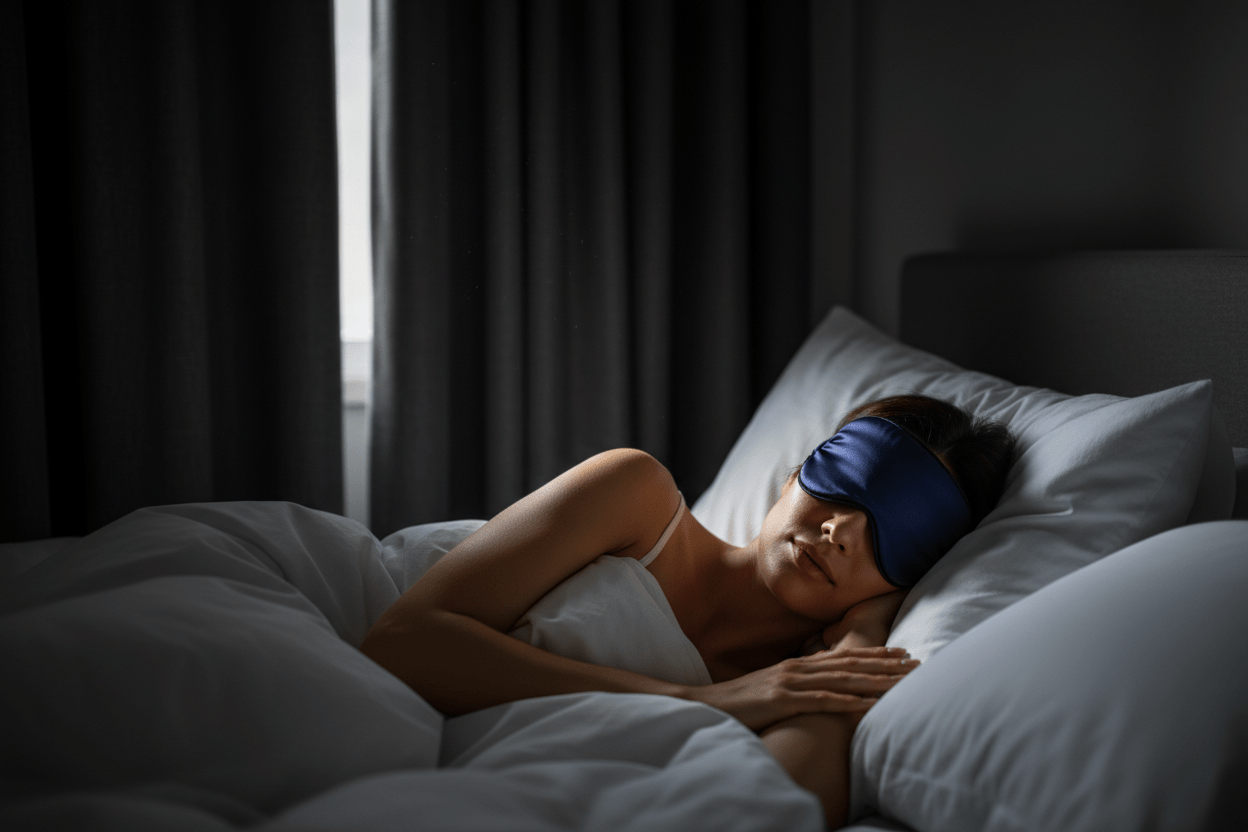
A sleep-friendly bedroom is one that aligns with human biology. The best environments for deep sleep and REM stability are dark, cool, quiet, low-stimulation spaces with clean air, minimal clutter, and predictable cues that reinforce nighttime physiology.
Research shows that light exposure at night, warm bedrooms, inconsistent noise, digital glow, environmental distractions, and poor airflow degrade sleep architecture.
This list outlines the 10 most effective, science-backed ways to transform your bedroom into a recovery space. Among these, complete darkness is the single most foundational factor.
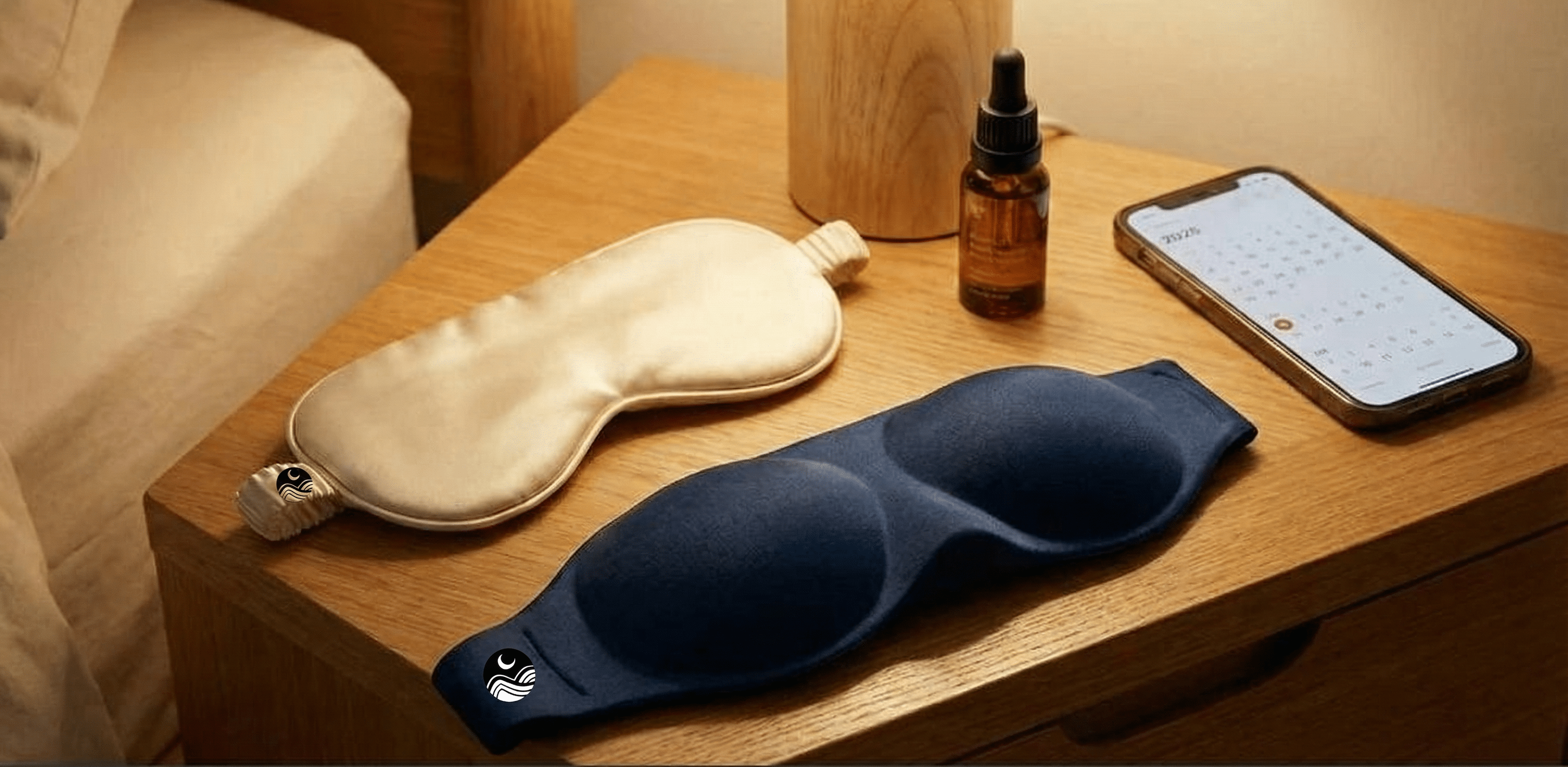
A contoured blackout mask such as the Nidra Total Blackout Mask consistently outperforms curtains, lighting adjustments, and tech solutions by blocking retinal light directly, making it the most reliable tool for a sleep-optimized bedroom.
Introduction
Most people think of sleep as an internal process, but the truth is that your environment plays a critical role in determining how deeply you rest. A sleep-friendly bedroom does not require expensive home renovations. It requires aligning your space with biology—supporting the natural cues that trigger melatonin, stabilize circadian rhythms, and prevent sleep disruption.
Bedrooms today often work against sleep. Streetlight seepage, device LEDs, clutter, warm indoor temperatures, mattress off-gassing, and unexpected noises produce physiological micro-arousals that fragment REM and shorten deep sleep.
The solution is to address the environment intelligently and systematically. This guide outlines ten of the most effective, research-backed strategies for creating a bedroom where sleep becomes deeper, calmer, and more restorative. The result is a nightly environment that supports recovery, mental clarity, and morning performance.
1. Create Total Darkness (The Most Important Sleep Environment Change)
Darkness is the strongest environmental signal for sleep. Light suppresses melatonin, keeps the brain’s arousal networks active, and fragments both deep sleep and REM.
Studies show that even dim light levels of 5 to 10 lux—similar to streetlights leaking through curtains—reduce nighttime melatonin and increase awakenings (Gooley 2011).
Most bedrooms are not dark enough. Urban lighting, hallway illumination, alarm clock glow, chargers, and early sunrises interfere with biological night.
Blackout curtains help but rarely seal completely. A Nidra-style total blackout mask is the most reliable way to guarantee complete darkness. Its contoured design eliminates the gaps where typical masks fail—nose bridge, cheeks, and outer eye area—ensuring complete retinal darkness even when sleeping on your side.
Darkness stabilizes melatonin, which stabilizes sleep depth. Without darkness, no bedroom can function as a true recovery space.
2. Lower Bedroom Temperature to Support Deep Sleep
Temperature is one of the strongest regulators of sleep architecture. The body must cool down to enter deep sleep. High temperatures delay sleep onset, increase restlessness, and reduce slow-wave sleep.
The ideal bedroom temperature is around 60–67°F (15–19°C). Indoor environments often run warmer, especially in apartments and shared HVAC systems, which leads to micro-arousals from heat discomfort.
Lowering ambient temperature supports natural melatonin-driven cooling, enhances deep sleep intensity, and reduces sweating. If cooling the entire home is difficult, options like breathable bedding, cooling fans, or avoiding late-evening exercise are helpful.
3. Eliminate Visual Clutter to Reduce Cognitive Load
Clutter increases cognitive stimulation, activating brain networks responsible for attention and decision-making. Even if you don’t consciously notice clutter at night, your brain does.
Clutter signals “incomplete tasks,” elevating stress and preventing the psychological shift into rest mode.
Removing unnecessary items, clearing surfaces, keeping closets closed, and simplifying décor reduces cognitive micro-stimulation.
A clean, calm, predictable bedroom environment supports melatonin onset and lowers evening cortisol.
4. Manage Bedroom Light Sources and Remove All LEDs
Even tiny points of light disrupt sleep. LEDs create inconsistent brightness pulses detected through eyelids.
Studies show that any light at night reduces melatonin and sleep stability (Harvard Health 2025). This includes router lights, clocks, chargers, thermostats, power strips, and reflective surfaces.
Cover LEDs with opaque tape, remove glowing clocks from your line of sight, and relocate chargers to another room. Combined with a blackout mask, this ensures a true darkness experience.
5. Choose the Right Sleep Mask for Full Blackout (Not Just Softness)
Not all sleep masks are created equal. Flat silk masks leak light around the nose. Weighted masks interfere with REM. Cheap foam masks compress over time.
Reliable blackout requires structural design. The Nidra Total Blackout Mask solves issues other masks cannot. Its 3D contoured design protects lashes, avoids lid pressure, and maintains a light seal even when changing positions.
For apartments, shared bedrooms, or early morning sun, this is one of the simplest and most effective upgrades.
6. Use Sound Management to Reduce Nocturnal Micro-Arousals
Noise doesn’t need to fully wake you to disrupt sleep. Variability—cars, hallway footsteps, partner movement—triggers micro-arousals that fragment REM and reduce deep sleep.
White noise, pink noise, and low-frequency sound generators create stable sound environments that mask unpredictable spikes.
Pink noise, in particular, improves deep sleep and memory consolidation by enhancing slow-wave synchronization.
Heavy curtains, rugs, and upholstered surfaces reduce echo and block outside noise.
7. Improve Air Quality and Ventilation for Better Oxygenation
Air quality affects sleep depth and morning alertness. Stale air increases CO₂, leading to shallow breathing and lighter sleep.
Dust, allergens, and VOCs from furniture and cleaning products irritate the airways and increase awakenings.
Opening windows before bed, using HEPA filtration, cleaning HVAC filters, and choosing low-VOC bedding create a healthier environment.
8. Manage Scent and Stimulus to Encourage Relaxation
Certain scents like lavender or sandalwood reduce sympathetic nervous system activity and improve relaxation.
The goal is subtle fragrance—not overpowering scents. Scent acts as a behavioral cue; a consistent nighttime aroma becomes a signal for winding down.
Avoid strong air fresheners or synthetic candles. Use diffusers or pillow sprays sparingly.
9. Replace Stimulating Decor With Calming Color Tones
Bright, high-contrast colors activate cognitive centers and increase alertness. Bedrooms benefit from muted tones: neutrals, soft blues, greens, grays, and earth tones.
Lighting should be warm and low-intensity; artwork should be calming. This visual environment promotes parasympathetic activity and helps melatonin rise.
10. Establish a Consistent Bedtime Ritual That Signals “Night Has Begun”
Behavior cues are powerful. Consistent pre-bed rituals cue the brain toward nighttime physiology and reduce cognitive load.
Light stretching, gentle breathing, dim-light reading, and skincare routines create predictability.
Pairing a blackout mask at lights-out becomes a strong sensory signal that biological night has begun.
Conclusion
A truly sleep-friendly bedroom supports biological night instead of contradicting it. Darkness, cool temperatures, low stimulation, consistent sound, clean air, and calming visuals all contribute to deeper rest.
Among all these factors, darkness has the strongest and most immediate impact. Even small amounts of light disrupt melatonin and fragment deep sleep.
The Nidra Total Blackout Mask remains the most reliable tool for ensuring full darkness, regardless of room conditions or schedules.
When the bedroom aligns with biology, sleep becomes deeper and mornings become clearer and more productive.