

Summary
Your skin runs on a 24-hour clock. At night, key repair processes increase, including barrier recovery, DNA repair, and antioxidant activity. Evening light, even at typical indoor levels, can suppress melatonin and delay the internal night, which reduces sleep quality and may blunt nocturnal skin repair.
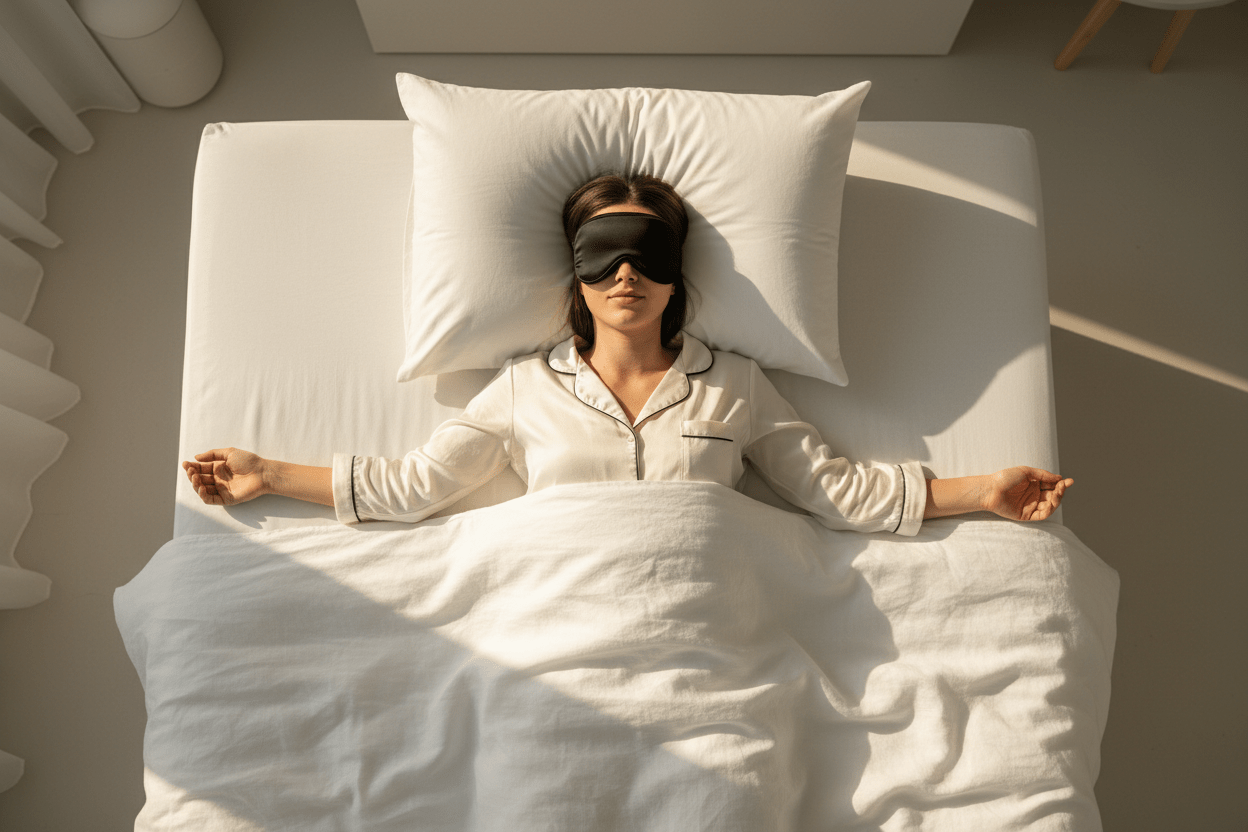
Creating true darkness improves sleep continuity and gives your skin the conditions it expects to renew. The practical path is simple: set a light curfew, pair a smart skincare routine with consistent bedtime, and use a true blackout solution.
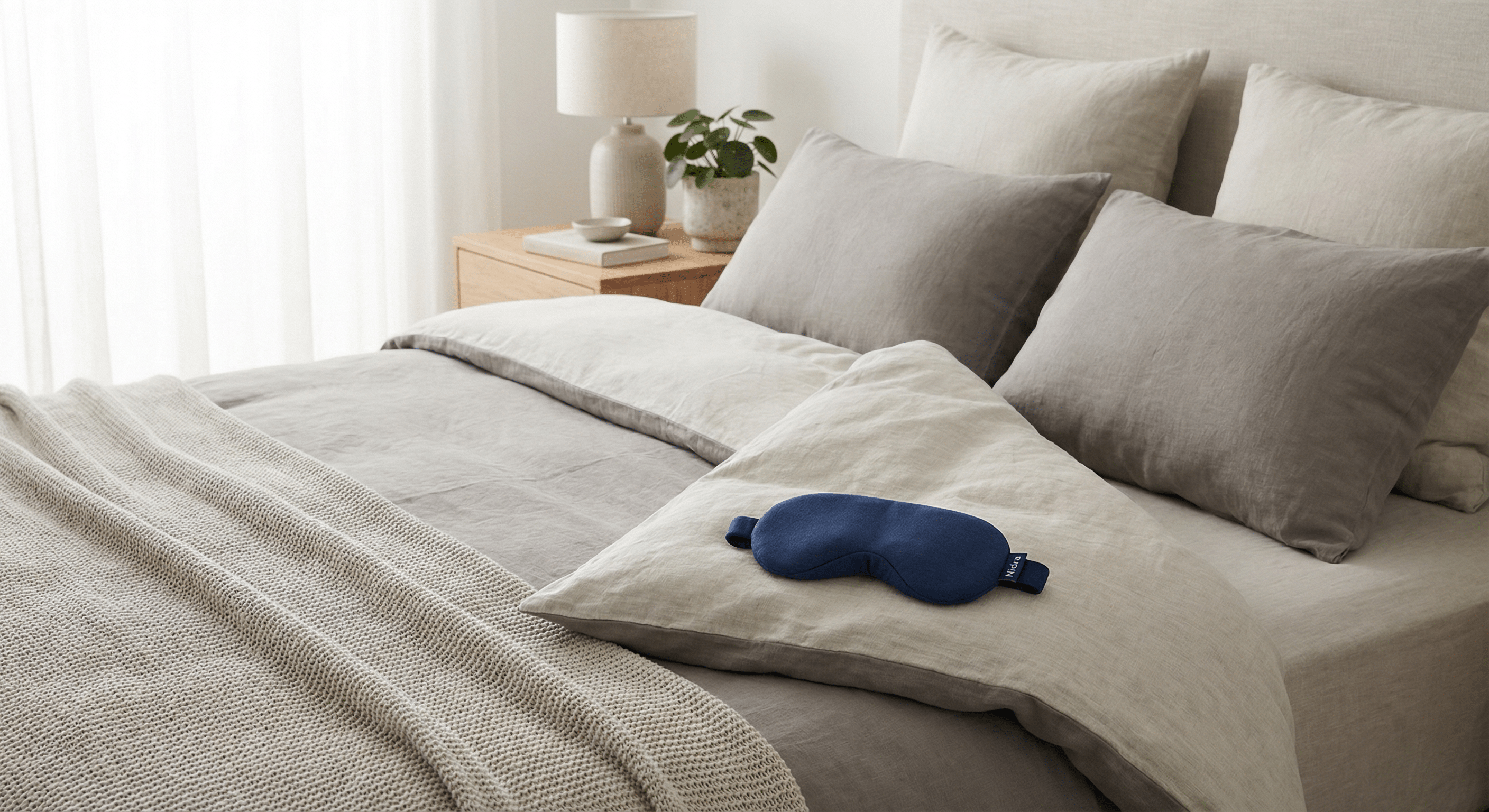
A contoured mask like the Nidra Total Blackout Mask preserves darkness without pressing on eyelids or lashes, so skincare can work overnight and you wake looking fresher and less puffy.
Introduction
The phrase “beauty sleep” sounds like marketing, but the biology is real. Your skin follows circadian rhythms that shift barrier function, cellular repair, and microcirculation across the day and night. When you give your body darkness in the evening and consolidated sleep at night, those rhythms run on time.
Light exposure late into the evening suppresses melatonin, shifts circadian timing, and increases the risk of fragmented sleep. This article translates the science into an executive-friendly playbook. You’ll learn what your skin does at night, how light affects its timing, and how to build a minimal routine that delivers visible benefits with almost no added effort.
Your Skin Has a Clock: What Changes at Night
Dermatology and chronobiology research agree: the skin is governed by circadian clocks that coordinate processes like barrier recovery, transepidermal water loss, immune surveillance, and DNA repair. See a review on the topic for details: Circadian Rhythm and the Skin: A Review.
- Barrier recovery and hydration: Barrier function and transepidermal water loss fluctuate daily. Nighttime is a window when barrier recovery increases, making evening moisturizers and actives more effective.
- DNA repair and antioxidant defenses: Because UV damage accumulates during the day, the skin increases DNA repair pathway activity at night.
- Microcirculation and puffiness: Fluid dynamics change with posture and sleep quality. Fragmented sleep can worsen morning puffiness; deeper sleep reduces it.
If you want your topical products to deliver, give your skin the darkness and sleep it expects.
How Light at Night Disrupts Your Skin’s Timing
Evening light — especially blue-weighted light from screens and LEDs — suppresses melatonin and delays its rise. Controlled experiments demonstrate that ordinary room light before bedtime suppresses melatonin compared with dim light (Room Light and Melatonin, 2011). The physiology behind blue-light sensitivity and melatonin suppression is well documented (Blue light — dose-dependent suppression) and covered in public guidance (Harvard Health: Blue Light Has a Dark Side).
Why it matters for your skin: Melatonin’s timing influences how consolidated your sleep is — and consolidated sleep is when the skin executes most of its nightly repair.
Sleep Quality, Inflammation, and Visible Skin Outcomes
Short or fragmented sleep affects immune function and stress signaling. Poor sleep increases irritability, inflammation, and reactivity—factors that worsen skin conditions and dull complexion. Authoritative resources summarize that better sleep supports immune function and emotional regulation (Harvard Health: Sleep Hygiene).
The Practical Beauty Protocol: Pair Skincare With Blackout
You don’t need a complicated regimen—just consistency, correct timing, and darkness.
Two hours before bed: control the light.
- Switch overhead lights to warm, low-level lamps.
- Enable Night Shift or warm-tone mode on all devices.
- Keep screens farther from your eyes; increased distance reduces light stimulus (Harvard Health).
One hour before bed: simple skincare.
- Cleanse gently to protect the skin barrier.
- Apply targeted actives (retinoids, peptides, etc.). Evening is ideal for repair-supportive products (see Circadian Rhythm & the Skin).
- Seal with a moisturizer to reduce overnight transepidermal water loss.
Lights out: create true darkness.
- Even a small amount of stray light can trigger alerting signals.
- Use a reliable blackout solution. A contoured mask preserves lashes and avoids pressure.
- The Nidra Total Blackout Mask seals properly along the nose and cheeks without smudging makeup.
Travel variation.
- Hotel curtains usually leak—your mask becomes your constant.
- Maintain the same routine whether at home or traveling.
- Get bright outdoor light after waking to anchor your body clock (see CDC Yellow Book: Jet Lag).
Lash Extensions, Makeup, and Fabric Friction
Flat masks touch lashes and lids, causing smudging or product transfer. Contoured masks eliminate this issue and protect lash extensions.
Use a silk pillowcase for hair/skin glide and a contoured mask for darkness. Both tools solve different problems.
Decision Table: Which Darkness Tool Is Right for Beauty Outcomes
| Goal | Blackout Curtains | Flat Silk Mask | Contoured Blackout Mask |
|---|---|---|---|
| Blocks ambient light reliably | High at home, low while traveling | Moderate, prone to gaps | High in all settings |
| Preserves eye makeup and lash extensions | Not applicable | Low to moderate | High due to eye-cup clearance |
| Reduces morning puffiness | Medium if room sealed | Low to medium | High due to consistent darkness |
| Comfort for side sleepers | Not applicable | Medium | High with stable strap |
| Portability for work travel | Low | High | High |
| Cost to implement | Medium to high | Low to medium | Low to medium |
Most people combine tools. If you must choose one, choose the portable option—it follows you everywhere.
Measurement and ROI for Busy Professionals
- Morning mirror check: Rate under-eye puffiness and tone for two weeks before/after implementing darkness.
- Sleep continuity: Track awakenings per night and time to fall back asleep.
- Routine adherence: Track how often you hit bedtime and wear the mask.
- 10 a.m. energy: Rate alertness 1–5 as a quick performance indicator.
If you’re not improving, tighten evening light exposure. Common culprits include bright kitchen lights, screens close to the face, and bedside lamps aimed poorly.
Common Pitfalls and How to Fix Them
You fall asleep with the TV on. Moving bright images delay melatonin and fragment sleep. Set a timer or remove TVs from the bedroom. Put the mask on as soon as your eyes feel heavy (Harvard Health).
You need night lights for safety. Use low amber or red light and keep the mask on when returning to bed.
Makeup transfers to your mask. Switch to a contoured design and clean the mask regularly.
You travel weekly. Build a micro-ritual: cleanse, moisturize, mask on, earplugs in. Seek morning light at destination (CDC Yellow Book).
Where the Nidra Total Blackout Mask Fits
The mask makes darkness repeatable at home and on the road. Molded eye cups avoid eyelid pressure and protect lash extensions. Adjustable straps stay stable for side sleepers. The shape seals typical leak zones, ensuring your skincare stays in place and light stays out.
Conclusion / Key Takeaways
Beauty sleep is real. Your skin expects darkness at night and light in the morning.
Evening light suppresses melatonin, delays internal night, and reduces the quality of sleep your skin relies on for repair. The fix is simple: control evening light, maximize darkness at bedtime, and use a reliable blackout mask.
The Nidra Total Blackout Mask gives you a portable, makeup-friendly way to protect darkness so your biology and products work together. Track results for two weeks—your morning mirror will confirm the benefits.
Citations
- Circadian Rhythm and the Skin: A Review
- Exposure to Room Light Before Bedtime Suppresses Melatonin
- Blue Light Elicits Dose-Dependent Suppression of Melatonin
- Blue Light Has a Dark Side — Harvard Health
- Sleep Hygiene: Simple Practices for Better Rest — Harvard Health
- CDC Yellow Book: Jet Lag Disorder