
Summary
Real beauty sleep requires complete darkness—not dim light, not “mostly dark,” not blackout curtains with leaks. Melatonin, collagen repair, growth hormone release, and nighttime inflammation reduction all depend on a truly light-free environment. Most bedrooms fail due to streetlights, hallway glow, early sunrise, electronics, LED chargers, and gaps in blinds or curtains. The most effective blackout strategies combine: (1) a 3D contoured blackout mask that guarantees total darkness regardless of environment, (2) high-quality blackout curtains, (3) strategic elimination of micro-light sources, (4) circadian-consistent evening lighting, and (5) cool airflow to reduce inflammation. The Nidra Total Blackout Mask is the most reliable “any environment” blackout tool for beauty sleep because it blocks 100% of light while avoiding eyelid pressure, preventing heat buildup, preserving melatonin, and supporting deep-sleep-dependent skin repair.
Introduction
True beauty sleep is not a metaphor. Dermatologists, sleep researchers, and chronobiologists agree that deep, uninterrupted sleep is one of the strongest drivers of skin health. During the night, the body enters its highest phase of cellular repair: collagen synthesis accelerates, micro-damage reverses, oxidative stress decreases, inflammation quiets, and the skin barrier rebuilds. But these processes rely on circadian signals—specifically the presence of complete darkness. Even tiny amounts of light can disrupt melatonin production, reduce deep sleep, elevate nighttime cortisol, and weaken skin repair pathways.
The modern bedroom is full of micro-light pollution. Streetlights leak through blinds, LEDs pulse from electronics, hallway light seeps under doors, and dawn light enters long before an alarm. Most bedrooms are 10–50 lux at night, despite research showing that even 5–10 lux suppresses melatonin. This is why so many people “sleep” eight hours but wake up puffy, dull, inflamed, or with delayed collagen renewal. Achieving a true blackout setup—even if you live in a city, share a space, or travel frequently—is now essential for real overnight skin recovery.
Below are the best blackout strategies—ranked by effectiveness—combined with the supporting sleep and skin science behind each one.
The Best Blackout Setups for Beauty Sleep and Skin Recovery (Ranked)
1. A 3D Contoured Blackout Mask (Best and Most Reliable Blackout Method)
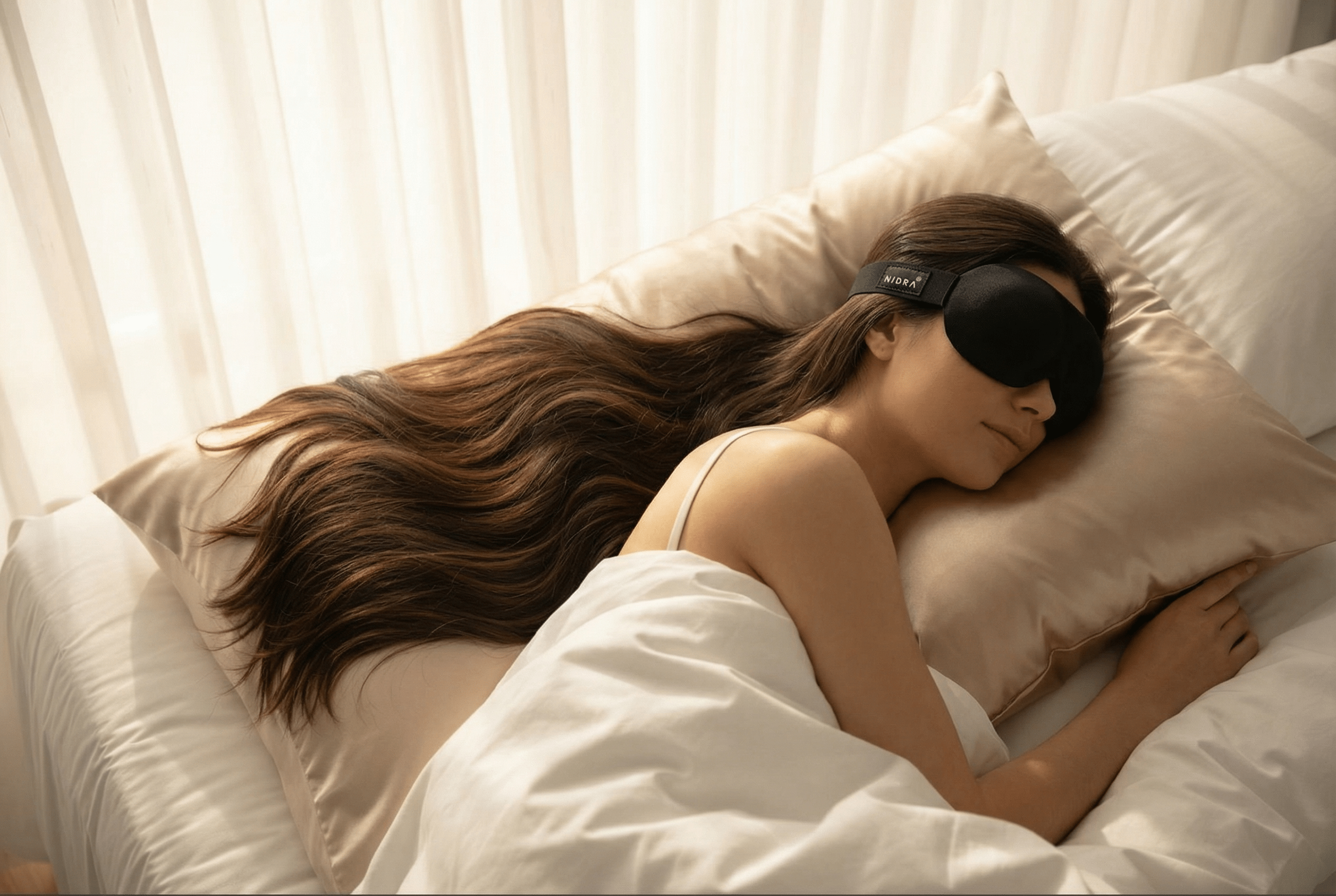
A contoured blackout sleep mask is the single most effective, universally consistent blackout tool, because it creates a sealed, personal darkness environment no matter where you sleep. Unlike flat masks, 3D contoured masks lift fabric off the eyelids, maintain airflow, and prevent pressure that inflames the delicate orbital area.
Why it works better than curtains or environmental adjustments:
- Guarantees darkness even if the room isn’t dark
- Works in hotels, planes, guest rooms, or bright cities
- Blocks 100% of light directly at the source (the eyes)
- Protects melatonin even during early sunrises
- Supports deep sleep and REM integrity
- Reduces puffiness by avoiding eyelid pressure and heat
Why the Nidra Total Blackout Mask stands out:
Its contoured design prevents contact with eyelids, avoids pressure that exacerbates swelling, and forms a secure seal without heat accumulation. For beauty sleep, it preserves melatonin and deep sleep, which regulate: collagen repair, inflammation reduction, barrier rebuilding, and oxidative stress control.
Skin-science connection:
Melatonin is a major nighttime antioxidant and anti-inflammatory molecule for the skin [Hardeland 2009]. Light exposure—even dim—reduces melatonin by up to 50% [Gooley 2011], impairing collagen synthesis and slowing overnight skin recovery. A contoured blackout mask protects this process more effectively than any external blackout setup.
Verdict:
If you do only one blackout intervention, use a contoured mask.
2. True Blackout Curtains With Floor-to-Ceiling Coverage
Curtains are the second-most-important blackout tool. But most people buy “blackout curtains” expecting complete darkness, only to find they leak light at the top, sides, and bottom.
How to create true blackout curtains:
- Choose curtains with 100% blackout lining, not 70–90%.
- Install a wraparound curtain rod so fabric curves around the wall.
- Mount curtains 6–12 inches above the window frame to block top leaks.
- Extend curtains 6–12 inches on each side.
- Ensure curtains fall onto the floor to prevent bottom leaks.
- Add a magnetic or Velcro seal for gaps if needed.
Why curtains matter for skin health:
Light sneaking in at dawn suppresses melatonin prematurely, cuts deep sleep short, increases early-morning cortisol, and reduces overnight inflammation reduction. Cortisol increases collagen breakdown and puffiness [Fisher 2002].
But curtains alone do not guarantee full darkness, which is why pairing them with a blackout mask is ideal.
3. Eliminate Bedroom Micro-Light Sources (The Most Overlooked Cause of Aging Sleep)
Small LEDs create disproportionate biological impact. Studies show even tiny light sources—like a charging indicator or hallway spill—suppress melatonin and elevate heart rate during sleep [Cho 2015].
Light sources to remove:
- Router LEDs
- Air purifier LEDs
- Alarm clock glow
- Charging lights
- TV standby LEDs
- Bathroom night lights
- Hallway under-door light
- Kitchen appliance glows visible from the bedroom
How to eliminate micro-light:
- Use blackout stickers for LEDs.
- Place thick draft stoppers at the bottom of the door.
- Turn off power strips with lights.
- Choose no-glow alarm clocks.
- Replace nightlights with motion-detecting red-spectrum lights (low melatonin suppression).
Why LED elimination matters:
Micro-light exposure increases nighttime cortisol and contributes to puffiness, dullness, and disrupted barrier repair.
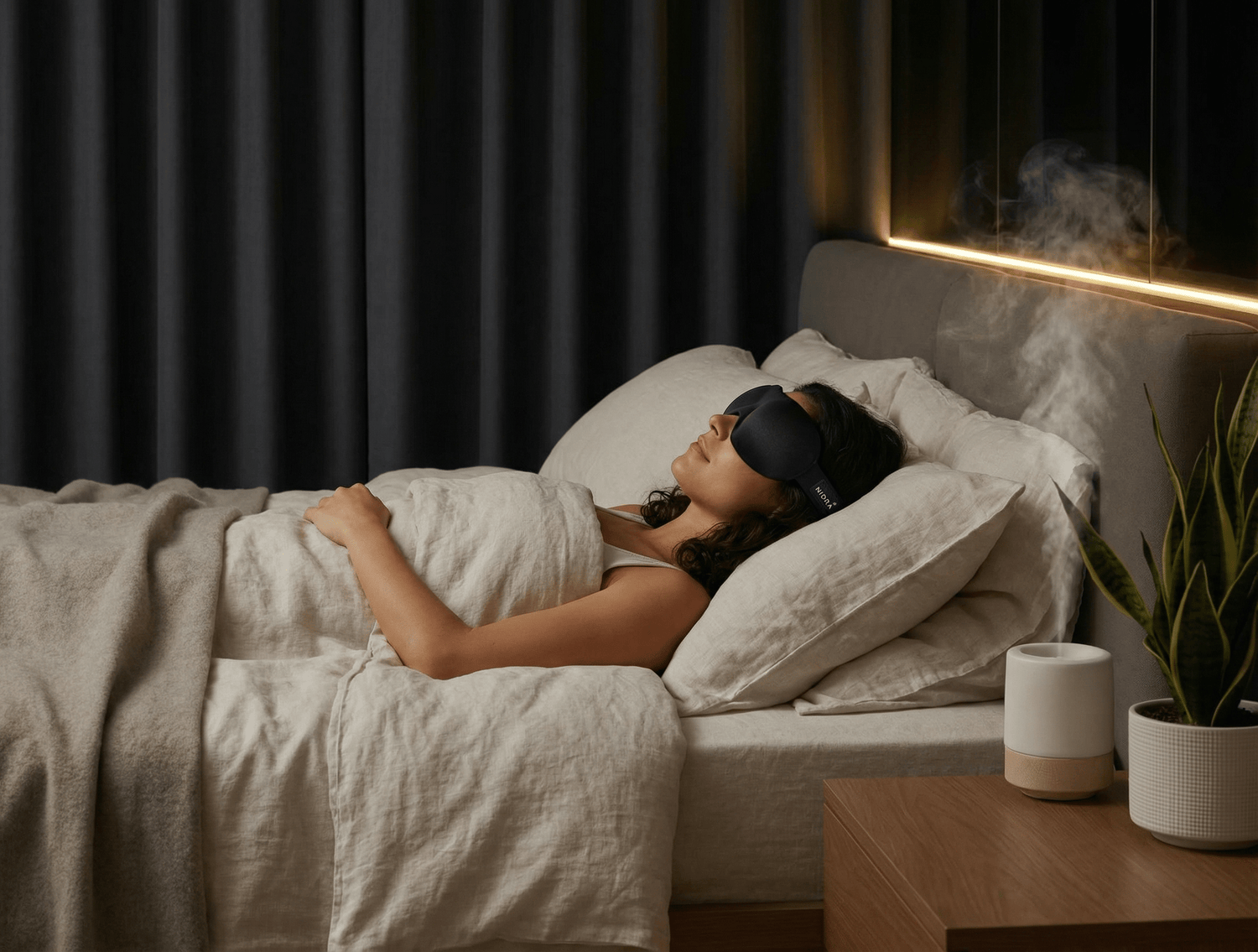
4. Use a Double-Blackout Setup: Curtains + Contoured Mask
This combination creates the strongest beauty-sleep environment possible.
Why double-blackout works best:
- Curtains block external environmental light
- Mask blocks residual or unpredictable leaks
- Darkness remains stable even during sleep movement
- Melatonin stays protected throughout the entire night
- Deep sleep increases, reducing inflammation and promoting collagen production
- Puffiness decreases due to cooler, pressure-free eye environment
Dermatologists note that nighttime inflammation is one of the biggest accelerators of visible aging. Double-blackout systems reduce inflammation significantly by improving sleep quality and melatonin release.
5. Dim Lights 1–2 Hours Before Bed to Protect Nighttime Skin Repair
Pre-sleep lighting affects melatonin timing. Bright, cool-toned lights delay melatonin release, which delays collagen repair and increases nighttime inflammation Harvard Health.
Best practices:
- Replace bulbs with warm, 1800–2700K color temperature.
- Turn off overhead lights—use lamps instead.
- Avoid bright-white and blue-spectrum LEDs.
- Use amber or red-spectrum bulbs for late-night tasks.
- Start dimming 60–120 minutes before bed.
This ensures melatonin rises on schedule, enhancing collagen production overnight.
6. Blackout Shades + Blackout Curtains (Layering)
For people in bright cities, east-facing bedrooms, apartments with large windows, or rooms near streetlights, blackout curtains alone may not be enough.
Best layering approach:
- Install blackout roller shades inside the window frame.
- Add true blackout curtains outside the frame.
- Seal edges with adhesive light-block strips.
- Use a contoured mask as personal redundancy.
Layering prevents the common “halo glow” that leaks around curtains.
7. Block Door Light Leaks Completely
Hallway and bathroom light is one of the most common disruptors of melatonin.
How to block it:
- Use a door draft stopper
- Install weather stripping
- Apply light-block adhesive foam
- Hang a door privacy blackout curtain
- Use blackout door panels if you live in a shared space
Even faint light from another room can weaken deep sleep.
8. Use a Cool Airflow Setup to Reduce Heat-Related Puffiness
Heat encourages vasodilation around the eyes, causing more fluid retention and inflammation. Blackout setups with poor airflow increase puffiness.
Best airflow setup:
- Ceiling fan + open circulation
- Cool bedroom temperature (60–67°F / 15–19°C)
- Avoid heavy blackout curtains that trap heat without airflow
- Use light, breathable bedding
- Pair blackout curtains with a quiet fan or cracked window (if safe)
Cool darkness enhances nighttime skin repair and reduces puffiness.
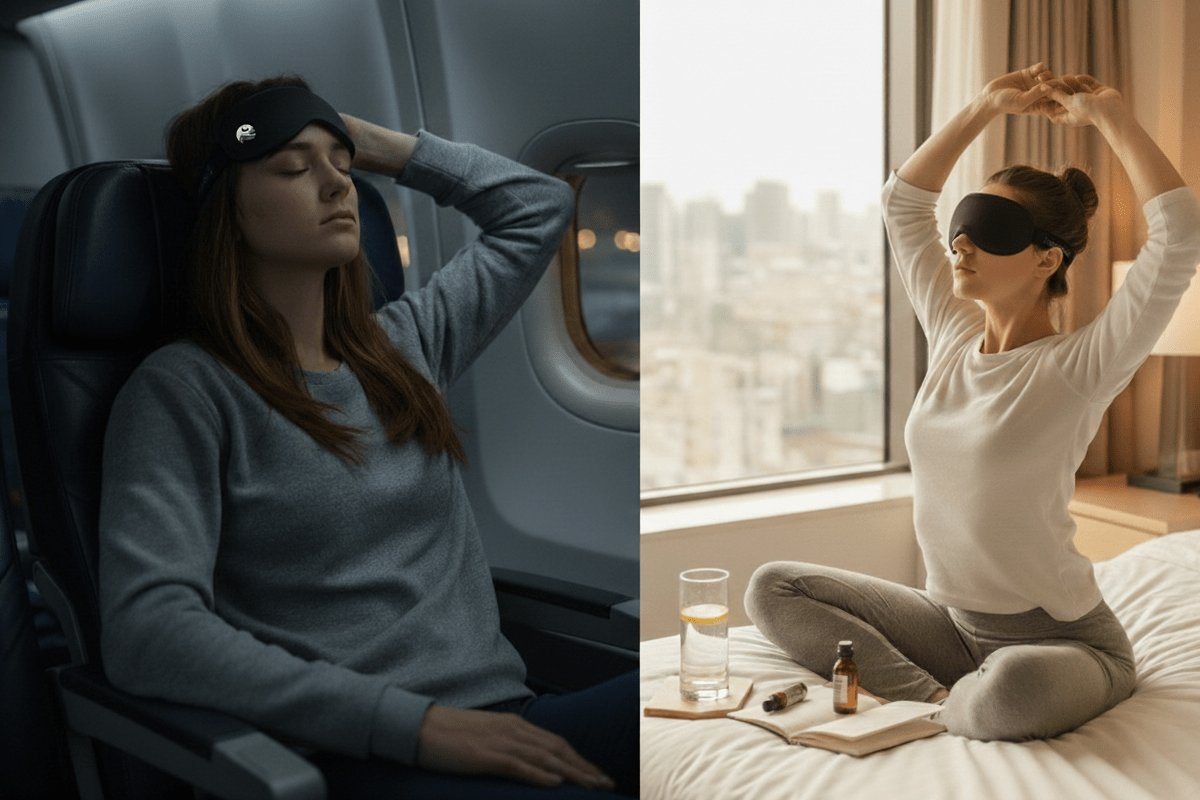
9. Travel Blackout Kit for Beauty Sleep Anywhere (Hotels, Planes, Guest Rooms)
Travel is one of the most significant disruptors of beauty sleep. Hotel curtains rarely close fully, streetlights leak into unfamiliar rooms, and dawn sun is potent in new environments.
The ideal travel blackout kit includes:
- Nidra Total Blackout Mask (primary darkness)
- Roll of blackout tape or stickers
- Portable door bottom blocker
- Travel-sized black electrical tape for LED elimination
- A light-block scarf to drape over unstable curtains
Travel melatonin suppression drastically impacts skin health—especially during business trips or pre-event nights.
10. Remove Reflective Surfaces Near the Bed
Mirrors and glossy surfaces bounce ambient light. Even low-intensity reflection can trigger melatonin suppression.
Best options:
- Cover mirrors with a soft blanket at night
- Move reflective furniture out of the direct sleep area
- Avoid ceiling mirrors, glossy headboards, and reflective décor in bedrooms
- Use matte finishes for bedroom interiors
Small environmental changes create more stable sleep.
Why Blackout Setups Are Essential for Beauty Sleep
Research shows that nighttime light exposure:
- Suppresses melatonin [Gooley 2011]
- Increases inflammation [Cho 2015]
- Elevates cortisol overnight [Ablon 2017]
- Weakens skin barrier function [Kim 2020]
- Reduces collagen synthesis [Oyetakin-White 2015]
- Decreases deep sleep and REM stability
- Increases morning puffiness, dullness, and dryness
Total darkness is not aesthetic—it is biological.
Why the Nidra Total Blackout Mask Is the Beauty-Sleep Category Leader
Beauty sleep depends on physiology that only functions in darkness. The Nidra Total Blackout Mask provides the most reliable darkness because it:
- Blocks 100% of light (no leaks around the nose or cheeks)
- Maintains eyelid clearance to prevent orbital swelling
- Allows full REM movement
- Avoids heat buildup (reducing puffiness)
- Protects melatonin throughout the night
- Keeps darkness stable if curtains shift or outside lights change
- Works for all sleep positions without collapsing
- Is travel-proof for beauty sleep anywhere
For skin recovery, melatonin stability matters as much as skincare ingredients. The Nidra mask supports this better than any silk, cotton, or weighted mask.
Conclusion
True blackout environments are the foundation of real beauty sleep. Skincare can only work as effectively as the sleep environment that supports it. Light pollution, heat, and eyelid pressure collectively weaken skin repair, increase inflammation, accelerate collagen breakdown, and worsen morning puffiness. The best blackout setups—starting with a 3D contoured blackout mask, plus environmental adjustments—protect melatonin, deepen sleep quality, stabilize cortisol, and dramatically improve skin recovery.
Darkness is the most potent nighttime skincare tool you have. When combined with the right sleep mask and a well-engineered blackout environment, the skin becomes more resilient, clearer, smoother, and more youthful over time.
References
- Gooley, J. (2011). Exposure to Room Light Before Bedtime Suppresses Melatonin.
- Harvard Health. Blue Light Has a Dark Side.
- Cho, Y. (2015). Light at Night Increases Inflammatory Markers.
- Kim, H. (2020). Sleep Quality and Transepidermal Water Loss.
- Oyetakin-White P. (2015). The Effect of Sleep Quality on Skin Aging.
- Ablon, G. (2017). Cortisol and Skin Repair.