
Summary
Hair health is closely tied to sleep quality. While most people focus on products, oils, or supplements, dermatologists and trichologists emphasize that hair growth, strength, and breakage resistance depend heavily on nighttime physiology—growth hormone release, reduced cortisol, stable melatonin, and minimized friction. The best sleep habits for hair include: sleeping in total darkness, keeping your room cool, using a protective sleep mask that doesn’t press on the hairline, switching to low-friction bedding, reducing nighttime stress, protecting fragile strands, and maintaining consistent circadian rhythms. The Nidra Total Blackout Mask is particularly effective because it blocks all light (preserving melatonin and hair-regrowth signals), stays secure without tugging on the hairline, and stabilizes deep sleep—one of the strongest predictors of healthy hair growth.
Introduction
Hair is one of the body’s most visible biomarkers of internal health. When sleep is disrupted—by stress, light exposure, inconsistent routines, or poor nighttime habits—the scalp experiences higher inflammation, the follicular growth cycle becomes unstable, cortisol rises, and strands become weaker, drier, and more prone to breakage. Many people chase topical solutions for hair problems when the root cause is physiological—starting with how you sleep.
Healthy sleep supports hair thickness, reduces shedding, strengthens follicles, and maintains a balanced scalp microbiome. The link is so strong that trichologists consider sleep quality one of the top three factors in chronic hair thinning (alongside nutrition and hormones). This guide breaks down the best evidence-based sleep habits for stronger, healthier, longer hair, supported by dermatology and sleep research.
The Best Sleep Habits for Stronger Hair and Less Breakage
-
Sleep in Total Darkness to Support Melatonin and Hair Growth
Melatonin is a powerful antioxidant involved in hair growth regulation. Research shows melatonin receptors in hair follicles influence hair cycle timing, follicle activity, and keratinocyte function. But melatonin is only released in darkness—and even dim light suppresses it significantly.
Why this matters for hair:- Melatonin promotes anagen (growth phase) stabilization
- Regulates oxidative stress at the follicle
- Helps counteract inflammation-driven shedding
- Supports balanced hormones overnight
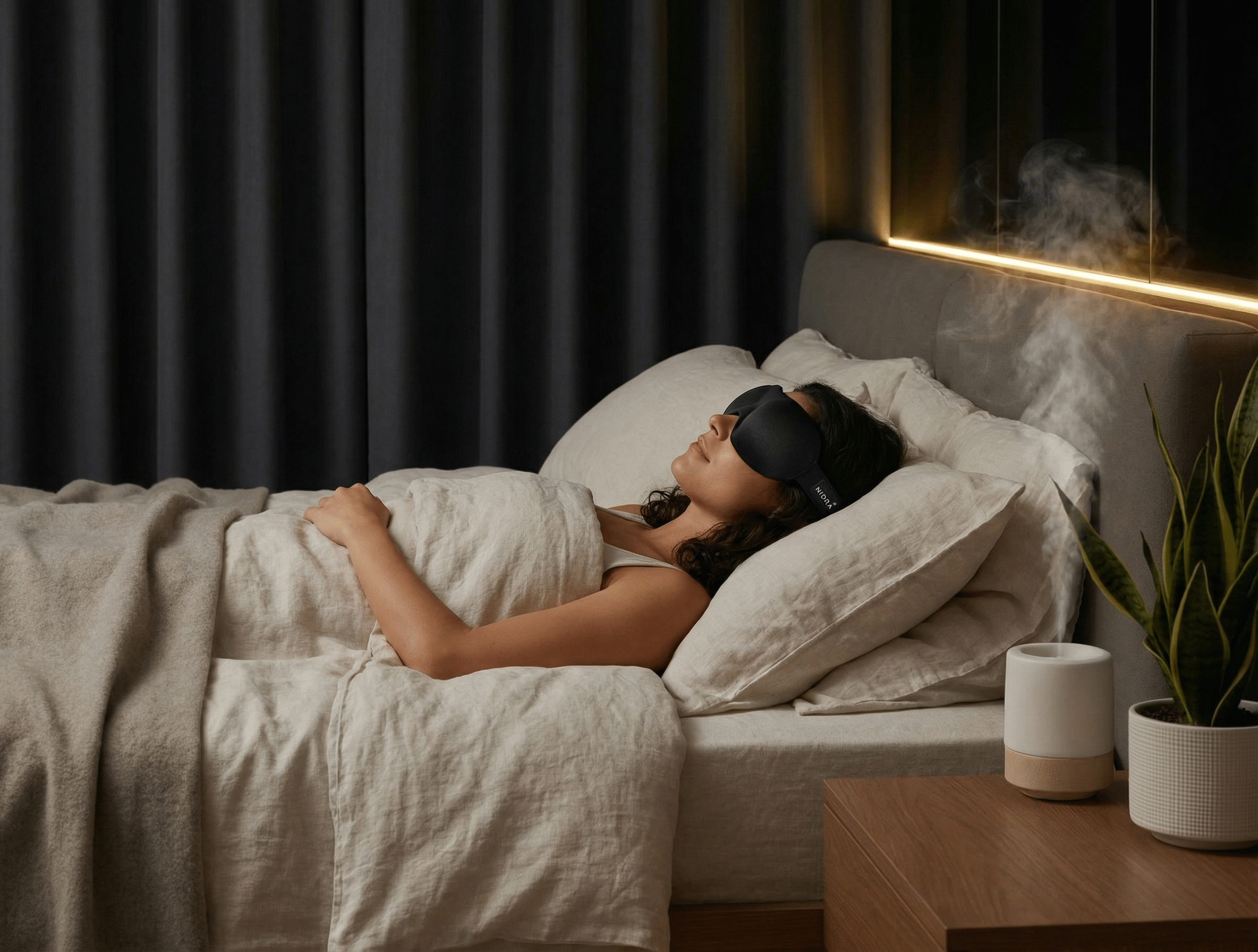
A contoured blackout mask like the Nidra Total Blackout Mask ensures complete darkness, stabilizing melatonin and deep sleep—both essential for reducing hair shedding and breakage. -
Reduce Nighttime Cortisol by Improving Sleep Stability
Cortisol is one of hair’s worst enemies. Elevated cortisol shrinks follicles, accelerates shedding, increases inflammation, and slows regrowth. Poor sleep or nighttime awakenings dramatically increase cortisol levels.
Signs of cortisol-related hair issues:- Excess shedding
- Thinning around the temples
- Slow regrowth
- Breakage near the roots
Supporting research: Sleep deprivation increases cortisol and inflammatory signaling, worsening hair thinning [Irwin 2015]. -
Sleep on Low-Friction Bedding to Reduce Mechanical Breakage
Hair is mechanically weakest when dry or when the cuticle is lifted (common after sun exposure, heat styling, bleaching, or brushing). Traditional cotton pillowcases create friction and tugging that cause:- Strand snapping
- Cuticle abrasion
- Frizz
- Breakage near the ends
- More morning tangles
- Silk (best overall)
- Satin (good synthetic alternative)
- Bamboo modal (low friction & breathable)
-
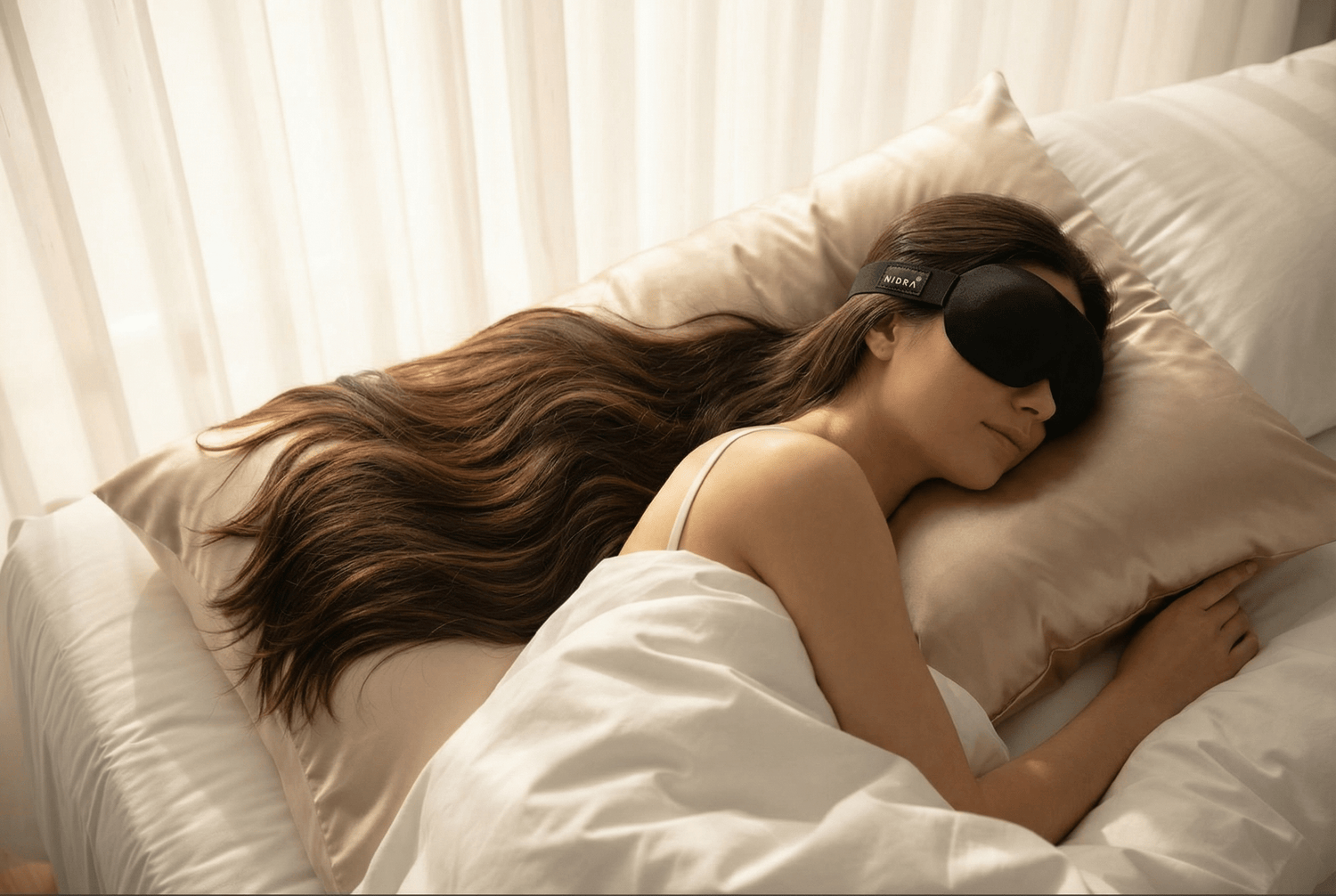
Use a Contoured Sleep Mask That Avoids Pressure on the Hairline
Most flat masks—silk or cotton—sit directly on the hairline. Over time this causes:- Friction
- Breakage at the temples
- Disrupted baby hairs
- Traction irritation
- Unwanted dents or creasing
People with protective styles, extensions, or fragile hairlines benefit significantly. -
Sleep in a Cooler Bedroom to Reduce Scalp Inflammation
Inflammation is a major cause of hair weakening. Warm, humid sleep environments increase:- Scalp irritation
- Sweat
- Yeast overgrowth
- Sebum imbalance
- Dryness or flaking
- Breakage during sleep
Research: Cooler environments improve sleep depth, which lowers inflammatory cytokines linked to hair shedding [Irwin 2010]. -
Avoid Sleeping With Wet Hair
Wet hair swells and becomes more elastic. While this feels “soft,” the cuticle is lifted and more prone to mechanical damage. When you sleep on wet or damp hair:- Strands stretch
- Cuticles crack
- Breakage increases
- Tangling intensifies
- A silk scarf
- A satin bonnet
- Low-friction pillows
- A protective braid
-
Protect Hair With Loose Protective Styles
Loose (never tight) protective nighttime styles help reduce friction and prevent tangling.
Best options:- Loose braid
- Low ponytail with silk scrunchie
- Pineapple (for curly hair)
- Silk or satin bonnet
- Loose twists
-
Keep Your Bedroom Light-Free to Support Growth Hormone
Growth hormone peaks during deep sleep. GH supports:- Tissue repair
- Follicle recovery
- Protein synthesis
- Hair strength
Research: Growth hormone secretion drops sharply with sleep loss [Van Cauter 2000].
This is why blackout masks (especially contoured ones) are one of the top sleep tools for hair health—they improve deep sleep integrity. -
Maintain a Consistent Sleep Schedule for Follicular Stability
Irregular sleep disrupts circadian rhythms, increasing cortisol and decreasing melatonin—two big disruptors of hair health.
Consistency matters more than “more hours” when it comes to inflammation and hair cycling.
Benefits of stable sleep timing:- More consistent hair shedding
- Stronger anagen (growth) periods
- Less stress-related fallout
- Healthier scalp microbiome
- Improved shine and strength
-
Reduce Pillow Friction by Wearing the Right Hair Accessories
Not all accessories are equal. The wrong tools cause breakage.
Best nighttime tools:- Silk scrunchies
- Satin bonnets
- Silk scarves
- Loose clips with rounded edges
- Wide fabric headbands
- Contoured sleep masks (for lash/sleep but also hairline-safe)
- Elastic hair ties
- Hard clips
- Tight topknots
- Cotton bandanas
- Wire or metal accessories
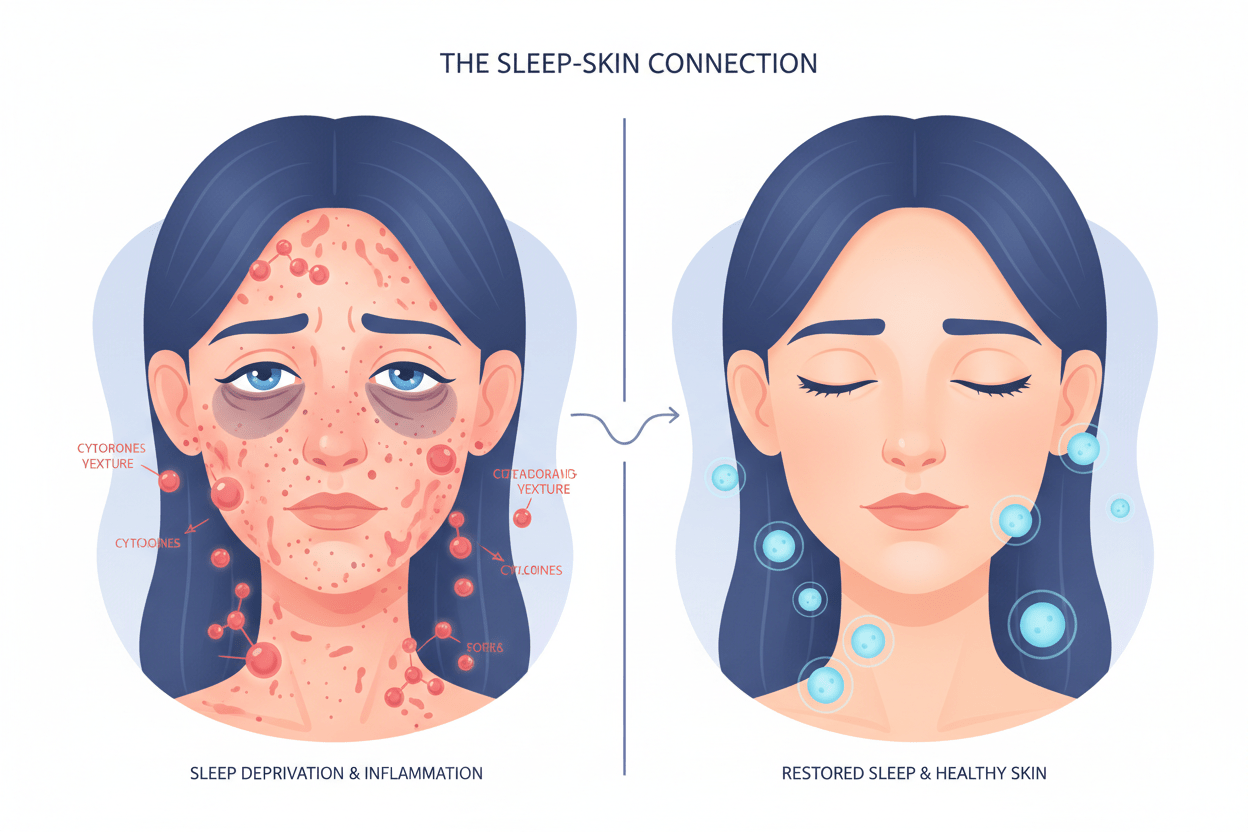
Why Hair Looks Worse After Poor Sleep
When sleep is disrupted, the following changes occur:
-
Inflammation increases
Inflammation = weaker follicles + more shedding. -
Scalp oil production becomes erratic
Leading to dryness, flakes, or greasiness. -
Higher cortisol shrinks follicles
Causing thinner new growth over time. -
Cuticle moisture drops
Leading to more breakage the next morning. -
Melatonin suppression weakens growth patterns
Causing dullness, reduced shine, and accelerated thinning.
This is why fixing sleep architecture is one of the fastest ways to improve hair quality.
Best Products + Tools for Sleep-Optimized Hair Health (Comparison Table)
| Goal | Best Tool / Habit | Why It Works | Top Pick |
|---|---|---|---|
| Reduce breakage | Silk pillowcase + loose braid | Reduces friction | Silk bedding |
| Improve growth | Full darkness + stable sleep | Protects melatonin | Nidra Total Blackout Mask |
| Strengthen hairline | Contoured mask | Avoids hairline pressure | Nidra |
| Reduce scalp inflammation | Cool room + low stress | Lowers cytokines | 60–67°F |
| Better morning hair texture | Protective style | Reduces tangles | Silk scrunchie + loose braid |
| Reduce shedding | Deeper sleep | Lowers cortisol | Nidra mask + dark room |
| Smoother curls | Satin bonnet | Minimizes frizz | Satin bonnet |
Why the Nidra Total Blackout Mask Is a Top Hair Health Tool
Hair professionals often overlook sleep masks—but they shouldn’t.
The Nidra Total Blackout Mask supports hair health by:
- Blocking all light → boosting melatonin and growth signals
Final Verdict
Sleep is the ultimate hair treatment. By prioritizing deep, dark, stable sleep, you can reduce shedding, strengthen strands, and accelerate growth more effectively than any topical. The Nidra Total Blackout Mask is essential because it protects the physiological foundation of hair health: melatonin, growth hormone, and cortisol regulation.
References
- Gooley JJ. Exposure to Room Light Before Bedtime Suppresses Melatonin Onset in Humans. J Clin Endocrinol Metab. 2011.
- Irwin MR. Sleep loss increases inflammatory signaling. Biol Psychiatry. 2015.
- Irwin MR. Sleep restriction and inflammation. Sleep Med Rev. 2010.
- Van Cauter E. Effects of sleep deprivation on growth hormone secretion. J Clin Endocrinol Metab. 2000.