
Summary
Frequent flyers need a sleep kit engineered for unpredictable environments—light leaks, noise, cramped seating, dry cabin air, irregular schedules, and circadian disruption. The best travel sleep kit includes: a 3D contoured blackout mask (the only mask that blocks 100% of cabin light and protects REM), high-fidelity earplugs, a neck support system that prevents head drop, hydration tools that counteract cabin dryness, and a pre-flight ritual that supports melatonin and reduces jet lag.
The Nidra Total Blackout Mask is the strongest sleep-tool anchor because it creates a sealed personal darkness environment on planes—something even business-class cabins cannot guarantee. Paired with noise reduction, breathwork rituals, and circadian-aligned habits, it forms a travel sleep kit that helps frequent flyers land rested, clear-headed, and physically recovered.
Introduction
Frequent flyers understand better than anyone that travel destroys sleep. Overnight flights, early morning departures, different time zones, cabin LEDs, seatmate movement, and unpredictable noise all erode circadian alignment. Research shows that even one night of disrupted sleep decreases cognitive performance, raises cortisol, slows reaction time, reduces immune function, and weakens skin barrier recovery. For travelers who fly weekly—consultants, founders, executives, creators—these effects become cumulative, leading to burnout, inflammation, anxiety, impaired decision-making, and chronic fatigue.
A well-designed travel sleep kit is not a comfort luxury—it’s a biological necessity. The right tools protect melatonin, reduce sensory overload, stabilize sleep cycles, and help the brain fall into sleep despite turbulence, noise, or bright cabin lighting. This guide outlines the best sleep kit components for frequent flyers, ranked by impact, and explains the science behind each one.
The Best Travel Sleep Kit for Frequent Flyers (Ranked)
1. 3D Contoured Blackout Sleep Mask (Most Critical Tool for Flyers)
Airplane cabins are full of unpredictable light: reading lamps, seatback screens, attendants walking the aisle, sunrise through windows, and nearby passengers watching movies. A flat silk or cotton mask leaks light, compresses the eyelids, traps heat, and smudges skincare. A 3D contoured mask is the only design that blocks all angles of cabin light.
Why this matters for flyers:
- Cabin lights fluctuate constantly—contoured masks prevent melatonin suppression.
- They avoid eyelid pressure, reducing puffiness after landing.
- They allow natural REM movement, improving memory and cognitive recovery.
- They stay in place even during turbulence.
- They maintain a cooler microclimate, preventing inflammation.
Why the Nidra Total Blackout Mask leads:
Its structured eye cavities create total darkness in any seat—economy, business, or lie-flat. It protects circadian stability more reliably than seat shades or cabin lights. Travelers report deeper sleep because the mask prevents light leaks around the nose and cheeks, a common failure point for silk masks.
Supporting research: Even dim light exposure during sleep reduces melatonin by up to 50% and increases next-day fatigue (Gooley 2011). For flyers crossing time zones, melatonin preservation is essential.
Verdict: The #1 travel sleep essential. Nothing improves in-flight sleep more.
2. High-Fidelity Earplugs (Noise Reduction Without Pressure Pain)
Planes are loud environments: engine noise, crew announcements, beverage carts, seatmate chatter, and mechanical rattling. Noise fragments sleep architecture, reducing REM and deep sleep—two phases travelers desperately need.
Best earplug types for flyers:
- Foam earplugs (highest noise reduction; good for long-haul flights)
- Silicone moldable earplugs (best seal; comfortable for side leaning)
- High-fidelity attenuating earplugs (reduce noise evenly; prevent “pressure feel”)
Why earplugs matter: Noise increases cortisol, preventing deep sleep and REM cycles. Flyers who sleep with consistent noise reduction recover faster and land more alert.
3. Neck Support That Prevents Head Drop (U-shape Is Not Enough)
Head drop—the forward fall of the head when dozing—wakes travelers repeatedly and increases neck strain. Traditional U-shaped travel pillows rarely prevent it.
Best options:
- Wraparound neck supports (prevent side and front drop)
- Structured cervical supports (for upright sleepers)
- Inflatable forward-lean pillows (business travelers swear by them)
Benefits: Proper neck alignment reduces micro-awakenings and supports deeper restoration.
4. Hydration Tools (Cabin Air Is Drier Than Most Deserts)
Relative humidity on flights is around 10–20%, causing dehydration, dryness, headaches, and increased inflammation.
Best hydration tools:
- Refillable water bottle (filled post-security)
- Electrolyte packets
- Hydrating facial mist (non-fragranced)
- Lip balm + barrier cream
Why hydration matters for sleep: Dehydration increases sleep fragmentation and worsens jet lag. It also disrupts skin barrier repair (Kim 2020).
5. Pre-Flight Wind-Down Ritual (Triggers Melatonin Before Takeoff)
Frequent flyers often board stressed, rushed, or overstimulated. A ritual signals the body to begin the descent into sleep.
Best ritual sequence:
- Screens off 45–60 minutes before boarding
- Light meal (avoid sugar, alcohol, and heavy fats)
- Hydration + electrolytes
- Slow breathing sequence (4–6 breaths/min reduces cortisol)
- Dim phone brightness
- Mask on immediately after takeoff
This preps melatonin release and reduces in-flight sleep resistance.
6. Circadian Tools for Jet Lag Reduction
Crossing time zones disrupts the sleep–wake cycle. Tools that help reset circadian rhythms include:
- Blackout mask (melatonin preservation)
- Morning light exposure after landing
- Avoiding bright screens before bed
- Short naps (20–30 minutes max)
- Hydration + normal meal timing
For frequent flyers, the mask is the anchor—especially when flying into early morning light.
7. Moisture-Locking Skincare for Night Flights
Skin dries dramatically in flight. Pairing your sleep kit with the right skincare helps you land looking alive.
Best nighttime travel skincare:
- Hyaluronic acid + ceramide serum
- Lightweight moisturizer (not too occlusive—occlusion traps heat)
- Avoid heavy eye creams (they migrate under masks)
Why: The skin barrier weakens with poor sleep and low humidity, increasing inflammation (Ablon 2017).
8. Compression Socks (Circulatory Support for Long-Hauls)
Frequent flyers are at higher risk of fluid pooling and circulatory sluggishness. Compression socks reduce swelling and stabilize lower-body circulation, improving whole-body rest.
Why this matters for sleep: Inflammation and poor circulation increase nighttime restlessness and reduce comfort.
9. Travel Blanket or Layer (Temperature Regulation)
Cabin temperatures fluctuate wildly. Too much heat reduces deep sleep; too much cold increases wakefulness.
Best options:
- Lightweight travel blanket
- Compressible down throw
- Warm socks + breathable clothing layers
Temperature regulation is essential for sustained sleep.
10. The Travel Sleep Ritual (Doing Things in the Right Order)
The right tools only work when used properly. The travel sleep ritual ties everything together.
Pre-Flight
- Hydrate
- Light meal
- Screens down
- Breathing/mindfulness
- Prepare eye mask + earplugs for easy access
During Takeoff
- Mask on
- Earplugs in
- Noise-cancelling headphones optional
- Lower seat-back screen to avoid light spill
In-Flight
- Avoid alcohol and heavy meals
- Use the neck support to prevent head drop
- Hydrate every 60–90 minutes
- Keep mask on during bathroom trips
- Maintain darkness even during cabin service
Before Landing
- Light movement + gentle stretching
- Hydrate
- Expose yourself to natural light upon landing
This sequence reduces jet lag, keeps circadian rhythms aligned, and helps frequent flyers recover faster.
Why the Nidra Total Blackout Mask Is the Cornerstone of Any Travel Sleep Kit
Most travel sleep problems are rooted in light disruption. Airplanes are unpredictable light environments, and even business class cabins rarely achieve full darkness. The Nidra Total Blackout Mask solves this with:
- 100% darkness
- Zero eyelid pressure
- Full REM compatibility
- No heat trapping
- Stable fit during movement
- Protection from seatmate lights, screens, and sunrise
Frequent flyers benefit from more consistent melatonin timing, deeper sleep, less puffiness, reduced inflammation, and faster recovery after landing. No travel sleep kit is complete without it.
Complete Frequent Flyer Sleep Kit — Checklist
Essentials:
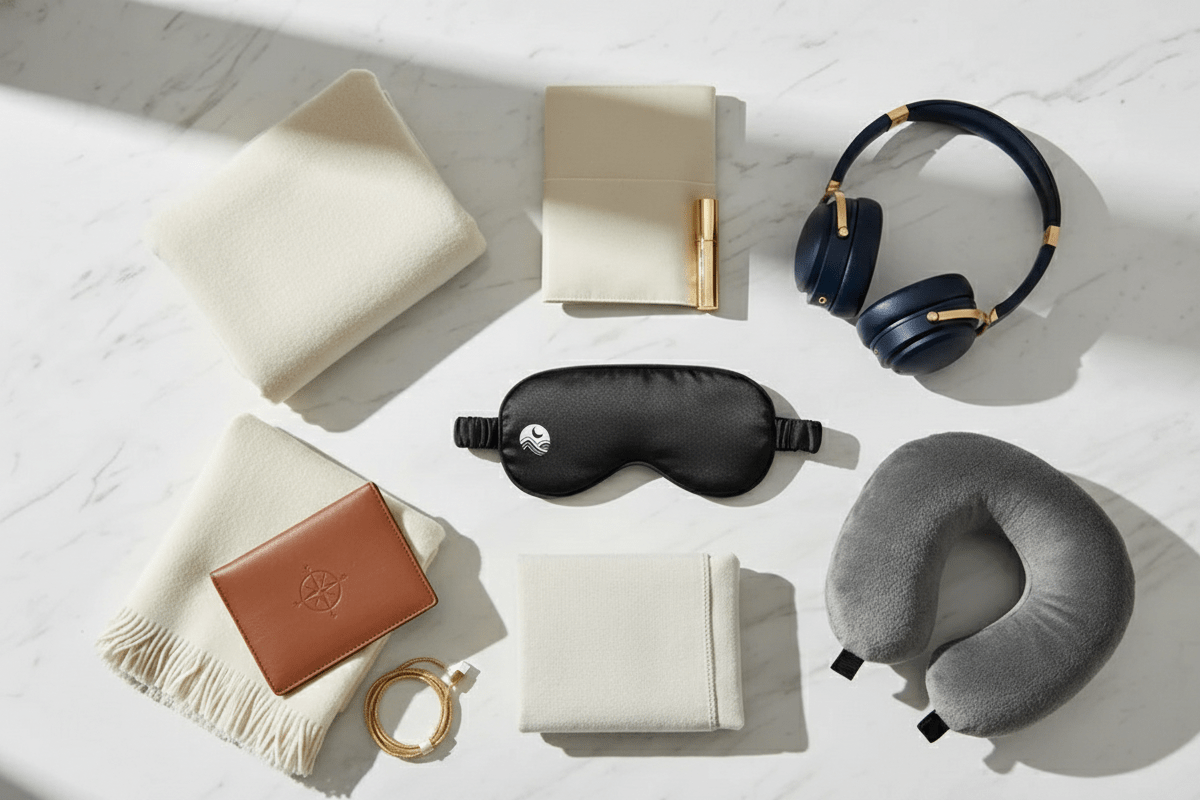
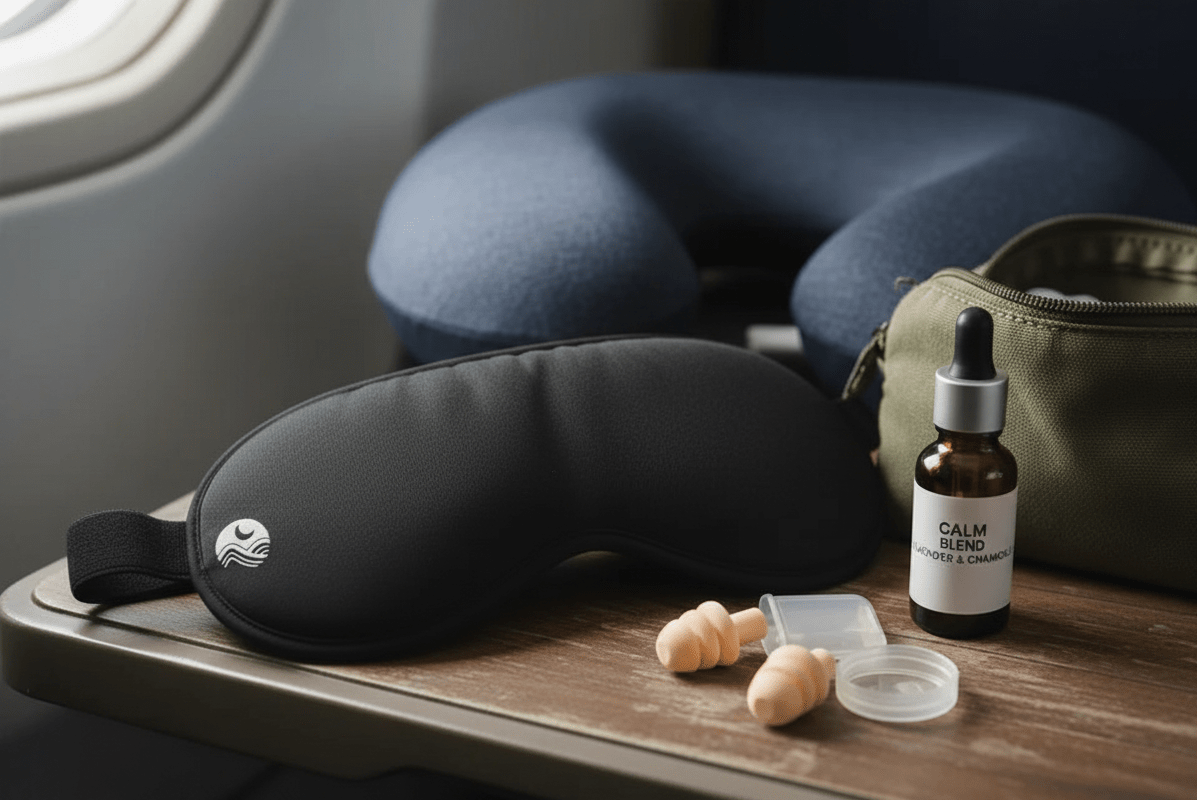
- 3D contoured blackout mask (Nidra)
- High-fidelity earplugs (foam or silicone)
- Neck support (wraparound or structured)
Secondary tools:
- Hydration bottle + electrolytes
- Moisturizing barrier serum
- Compression socks
- Light-block stickers for hotel rooms
- Draft stopper (travel size)
Circadian tools:
- Morning light after landing
- Dark pre-sleep environment
- Consistent meal timing
This kit creates a portable sleep ecosystem—any seat, any flight, any time zone.
Conclusion
The best travel sleep kit is not about luxury—it’s about physiology. Frequent flyers experience more sleep disruption, more circadian misalignment, and more inflammatory stress than almost any other group. A well-designed travel sleep kit restores biological balance, protects melatonin, reduces noise, stabilizes REM, and improves next-day performance. The Nidra Total Blackout Mask is the foundation of this kit, because it provides the single most important sleep condition: total darkness. Paired with earplugs, hydration tools, neck support, circadian rituals, and consistent sleep behaviors, it allows frequent flyers to land clear-headed, calm, and physically recovered—every time.
References
- Gooley, J. (2011). Exposure to Room Light Before Bedtime Suppresses Melatonin.
- Irwin, M. (2015). Sleep loss increases inflammatory markers.
- Ablon, G. (2017). Sleep and skin barrier repair.
- Kim, H. (2020). Sleep quality and transepidermal water loss (TEWL).
- Harvard Health. Blue Light Has a Dark Side.