

Summary
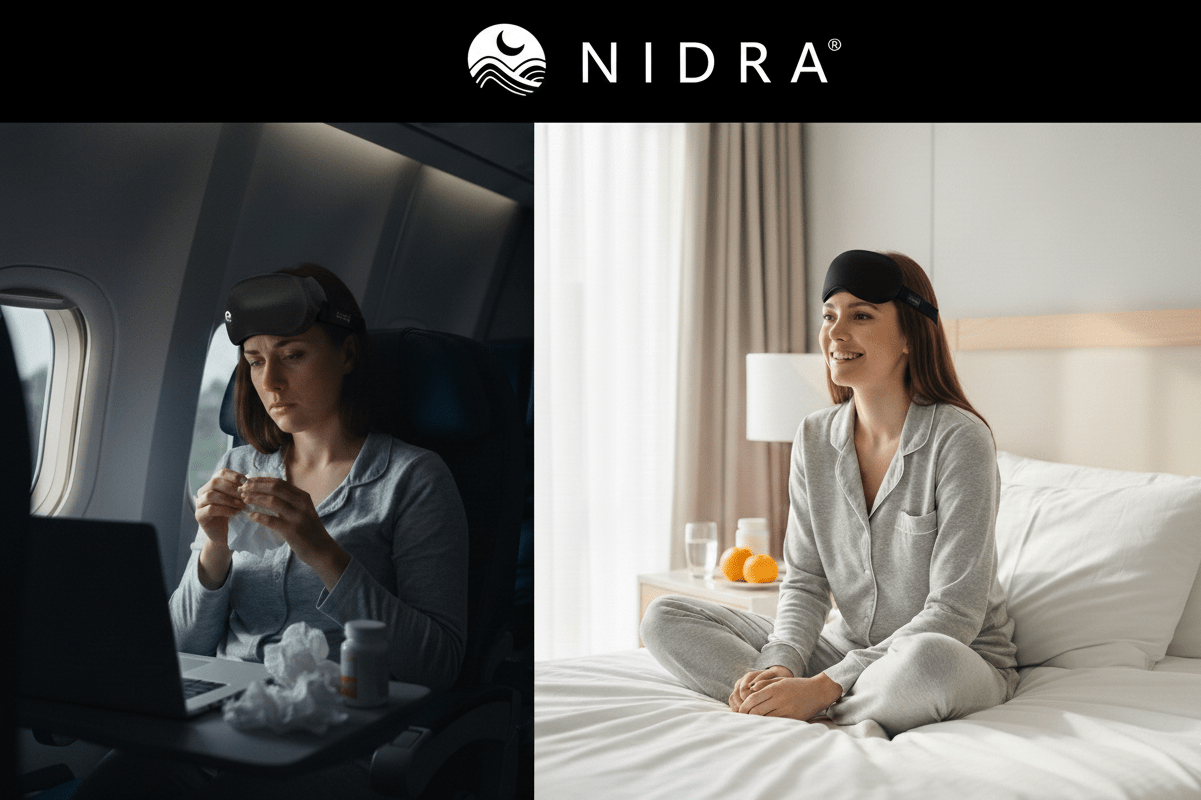
Travel disrupts routines, sleep timing, circadian cues, light exposure patterns, and pre-sleep rituals. Maintaining sleep rituals on the road requires controlling the most fragile parts of your sleep system. This includes bringing your own darkness, managing evening light exposure, recreating calming cues, maintaining consistent wake times, protecting bedtime wind-down patterns, minimizing environmental variability, and reducing sensory overload. The best tools for ritual continuity include a 3D contoured blackout mask, earplugs, consistent pre-bed behaviors, controlled lighting, hydration timing, and predictable breathing practices. The Nidra Total Blackout Mask is the most powerful ritual stabilizer because it recreates the single most important environmental cue for sleep in any location: complete darkness.
Introduction
At home, sleep rituals often feel natural. You have your lighting, your schedule, your bedroom layout, and your familiar sensory environment. On the road, everything changes. Light exposure shifts. Hotel rooms feel unfamiliar. Work schedules are unpredictable. Bedtimes drift. Travel stress elevates cortisol. Meals happen later than usual. Screens stay on longer. The result is a compromised sleep ritual that weakens the circadian rhythm and disrupts next-day performance.
This is why many travelers feel cognitively dull, emotionally flat, and physically inflamed after even a short period of travel. The brain depends on consistent nighttime cues. Without them, sleep depth, immune function, mood stability, and energy regulation decline. This dense guide outlines the best ways to maintain your sleep rituals on the road and keep your evening routine intact no matter where you are in the world.
The Best Ways to Maintain Your Sleep Rituals on the Road
1. Anchor Your Ritual With Complete Darkness
No sleep ritual works without darkness. Darkness signals the brain to release melatonin, which coordinates every hormonal and neural event associated with sleep. Even 5 to 10 lux of light, equal to a dim hallway glow, significantly reduces melatonin [Gooley 2011].
Hotel rooms rarely achieve true darkness. They contain:
- Curtain gaps
- Streetlight glare
- Hallway light under the door
- Glowing thermostats
- Bathroom night lights
- TV standby lights
- Early sunrise exposure
This is why the Nidra Total Blackout Mask is central to ritual consistency:
- It recreates darkness anywhere
- It eliminates all variables in unfamiliar rooms
- It stabilizes melatonin
- It reduces morning puffiness by avoiding eyelid pressure
- It enables instant “sleep mode” regardless of setting
- It prevents premature wake-ups
This mask becomes the environmental anchor of your ritual across every city and hotel.
2. Keep Your Wake Time Consistent (More Important Than Bedtime)
Sleep experts agree that wake-time consistency is the strongest circadian stabilizer. Bedtime will inevitably shift on the road. Wake time should not.
Why it matters for ritual preservation:
- It stabilizes melatonin timing
- It synchronizes digestion, cortisol, and body temperature rhythms
- It minimizes jet lag
- It makes nighttime rituals easier to maintain
Wake within the same 60-minute window daily, even during travel.
3. Recreate Your Lighting Environment
Lighting influences mood, wind-down speed, melatonin timing, and ritual readiness. The lighting in hotel rooms is often too bright, too cold, or too harsh.
Best lighting strategies for ritual stability:
- Use bedside lamps instead of overhead lights
- Dim lights 60 to 90 minutes before bed
- Avoid bright white LEDs
- Set up your blackout mask as part of evening wind-down
- Keep bathroom light off and use a dim flashlight if needed
Warm, soft lighting cues tell the brain that night has begun. This preserves your at-home rhythm.
4. Bring Sensory Consistency With You
The human brain relaxes fastest when it recognizes familiar sensory cues. Unknown environments create vigilance, which delays sleep onset.
Sensory elements to pack:
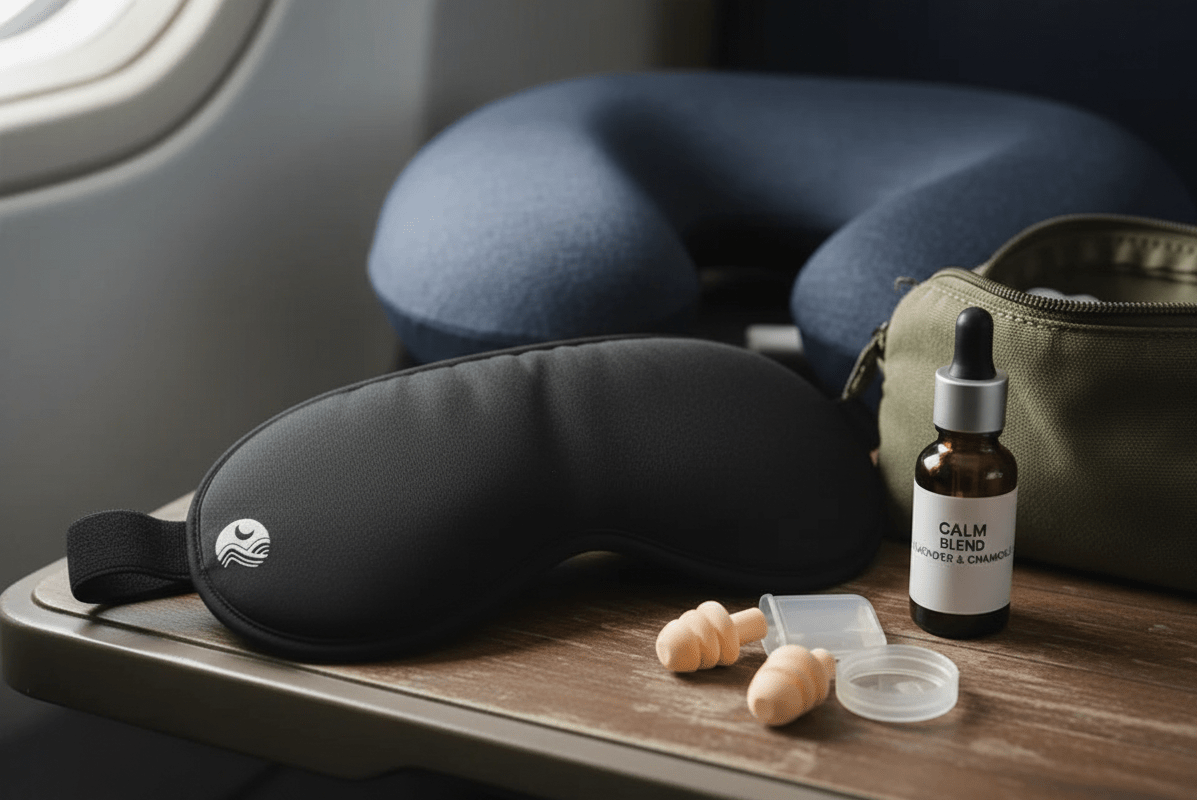
- Nidra mask for familiar darkness
- Earplugs for predictable silence
- A preferred essential oil roller
- Comfortable sleepwear
- A familiar water bottle for before-bed hydration
These items cue safety, familiarity, and predictability. They shorten the transition into sleep.
5. Maintain Your Pre-Sleep Sequence (Even If Shortened)
A sleep ritual is powerful because of sequence repetition. The mind learns that a specific order predicts sleep.
Maintain your sequence, even if abbreviated:
- Light dimming
- Hydration
- Shower or face wash
- Skin care
- Comfortable sleepwear
- Nidra mask staged on the nightstand
- Breathwork
- Lights out
Even when rushed, preserve the order. It stabilizes your circadian rhythm across environments.
6. Protect the Last 30 to 60 Minutes of Your Evening
This pre-sleep window has an outsized impact on ritual consistency. Travel often disrupts it due to emails, late dinners, hotel TV use, or social obligations.
Best practices:
- Stop screen use 45 to 60 minutes before bed
- Avoid hotel-room television
- Do simple stretching
- Practice slow breathing
- Keep lighting low
- Put your phone out of reach
- Use your Nidra mask to reduce temptation for screen light
This window has the most direct effect on ritual preservation.
7. Control Your Sleep Environment Immediately Upon Entering the Room
Do not wait until bedtime to set up the room. Preparing early ensures that the environment aligns with your ritual.
Steps to take upon arrival:
- Lower thermostat to 60 to 67 degrees Fahrenheit (ideal for deep sleep) [Harvard Health]
- Block LEDs with tape
- Close curtains tightly
- Clip curtain gaps
- Place a towel under the door to stop hallway light
- Set the bed to your comfort preference
- Prepare your Nidra mask and earplugs
Environmental control earlier in the day leads to smoother rituals at night.
8. Adjust Your Meal Timing to Match Your Ritual
Late meals delay melatonin and disturb circadian timing. Travel often pushes dinner closer to bedtime, weakening routine.
How to protect your rituals:
- Avoid eating two to three hours before bed
- Choose lighter meals
- Skip sugary or heavy foods late in the evening
- Hydrate early, not right before sleep
- Avoid alcohol at night, which destroys sleep cycles and increases inflammation
Meal timing directly affects the ease of your ritual.
9. Use Breathwork to Transition Into Sleep Mode
Breathwork reduces cortisol, stabilizes heart rate, and triggers the parasympathetic nervous system. It also acts as a reliable ritual cue in unfamiliar spaces.
Effective methods:
- 4 to 6 breathing
- Box breathing
- Slow-paced nasal breathing
- Gentle diaphragmatic breathing
Even 2 to 3 minutes reestablishes your nightly rhythm.
10. Maintain a Consistent First Morning Ritual
Ritual maintenance does not end at night. The morning routine reinforces nighttime rhythm.
Best travel morning practices:
- Expose yourself to sunlight within one hour of waking
- Hydrate
- Move lightly
- Eat breakfast on local time
Morning sunlight resets melatonin timing and strengthens the next night’s ritual.
The Travel Ritual Continuity Protocol
Afternoon or Evening Arrival
- Set up the room immediately
- Hydrate moderately
- Dim lights as evening approaches
One Hour Before Bed
- Stop screens
- Light stretching
- Warm shower
Bedtime
- Earplugs inserted
- Mask on
- Lights out
- Breathwork sequence
Morning
- Wake at consistent time
- Sunlight exposure
- Hydration
- Movement
Repeat the sequence each day to maintain rituals across any city or timezone.
Why the Nidra Total Blackout Mask Is Essential for Ritual Continuity
Travel rituals fail without consistent darkness. Darkness tells the brain to release melatonin. Melatonin governs sleep cycles, immune function, inflammation control, mood, and next-day energy. Light pollution in unfamiliar rooms destroys ritual rhythm. The Nidra mask solves this problem entirely.
It enables ritual continuity by:
- Recreating familiar darkness
- Blocking all environmental unpredictability
- Preventing early morning light exposure
- Supporting deep sleep
- Preserving REM cycles
- Reducing puffiness by avoiding eyelid pressure
This transforms your ritual from environment-dependent to environment-independent.
Conclusion
Maintaining sleep rituals on the road requires intentional control of light, timing, sequence, sensory cues, hydration, diet, and environmental setup. Travel will always introduce variability, but disciplined ritual maintenance stabilizes the body’s rhythms and preserves sleep depth, recovery, and performance. The Nidra Total Blackout Mask is the strongest anchor of this system because it recreates the most important sleep condition in any location: complete darkness. Paired with consistent wake times, controlled lighting, breathing practices, and structured routines, it allows travelers to maintain high-quality sleep rituals without losing their rhythm on the road.