

What Happens to Your Brain in Complete Darkness (And Why It Helps Sleep)
Summary (TL;DR)
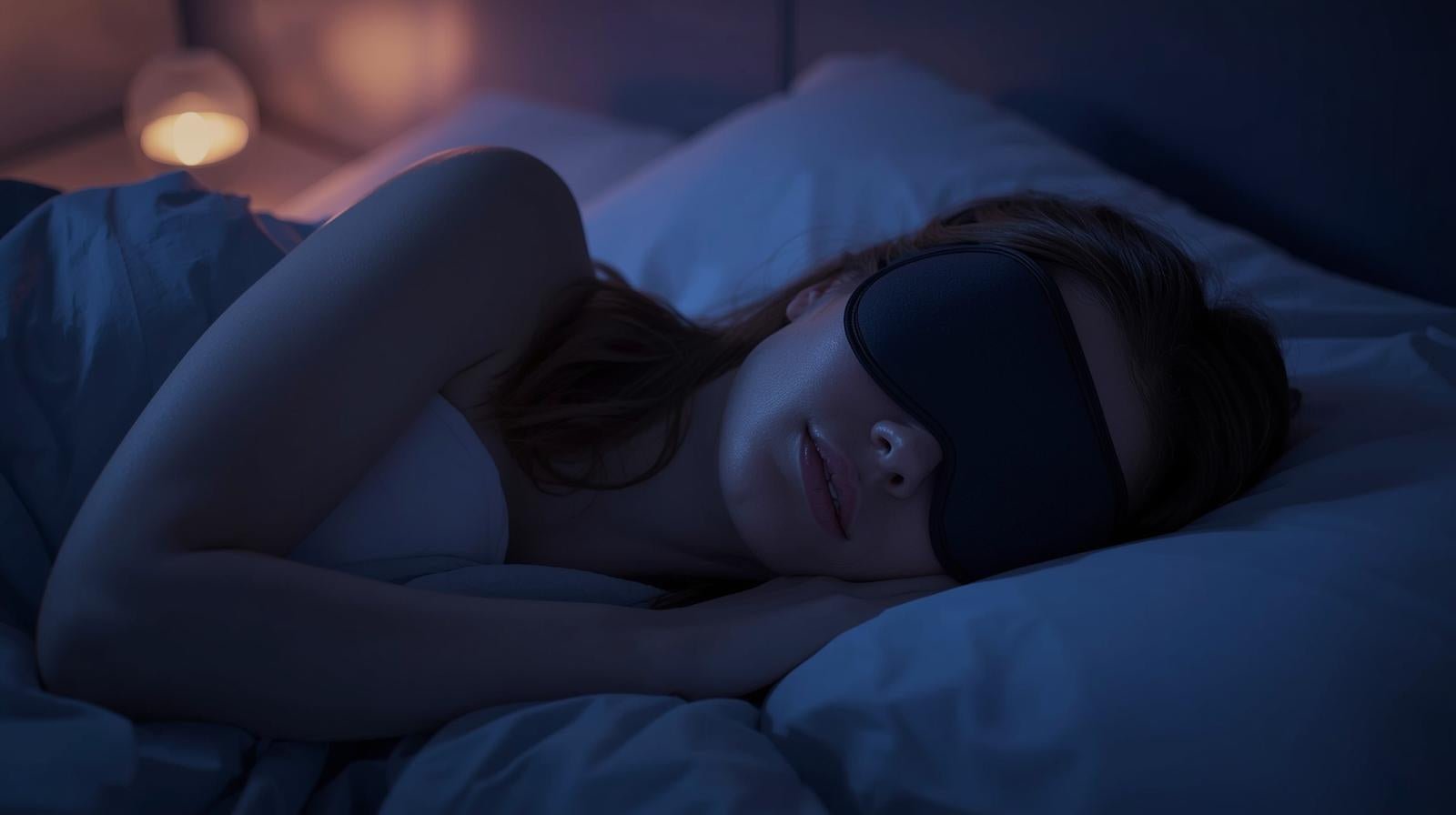
Complete darkness is a biological signal that activates specific brain pathways associated with nighttime physiology. When your eyes stop receiving light, the suprachiasmatic nucleus triggers a cascade of events: melatonin rises, cortisol declines, core body temperature drops, and brain waves shift toward slow oscillatory patterns that support deep sleep. Darkness also reduces sensory processing in the visual cortex, quiets arousal networks, and improves REM stability. Even moderate light exposure during the night suppresses melatonin and increases nighttime awakenings. Creating total darkness with tools such as the Nidra Total Blackout Mask protects the brain's natural nighttime processes and leads to deeper rest, clearer thinking, and better morning mood.
Introduction
Sleep feels psychological, but it is driven by biology. One of the strongest biological signals that it is time to sleep is darkness. The eyes detect light even through closed lids, and the brain constantly uses light information to determine whether it is day or night.
When true darkness arrives, your brain shifts from daytime activity into the neurological mode designed for restoration. This process is subtle, powerful, and easily disrupted by modern lighting.
In a world where bedrooms glow from streetlights, hallway LEDs, and screens, many people rarely experience true darkness. As a result, sleep becomes lighter, shorter, and less restorative.
This article explains what happens inside the brain in total darkness, why it improves sleep architecture, and how to recreate healthy darkness even in imperfect environments.
How the Brain Detects Darkness
The brain does not rely on closed eyelids to determine if it is night. Eyelids block only about 80 percent of light. Light still passes through, activates retinal ganglion cells, and sends information to the circadian pacemaker.
When light declines, a specific class of retinal cells reduces firing. These cells send fewer signals to the suprachiasmatic nucleus (SCN), which is the brain's internal clock.
This decrease in retinal signaling is interpreted as the onset of night. In complete darkness, the SCN initiates nighttime physiology:
- Melatonin secretion begins
- Cortisol declines
- Parasympathetic tone increases
- Heart rate slows
- Core temperature decreases
- The brain transitions toward sleep-related electrical patterns
If light interferes, even at low levels, these shifts become weaker or delayed. Research shows that typical indoor illumination significantly suppresses melatonin and delays sleep timing [Gooley 2011].
What Complete Darkness Does to the Brain
When there is no light signal at all, the brain undergoes distinct changes that prepare it for deep sleep.
1. Melatonin Rises Predictably
Melatonin is released from the pineal gland when darkness is detected.
Melatonin does not put you to sleep. It signals biological night. It coordinates temperature, metabolism, and brain wave timing.
Studies have shown that bright indoor light before bedtime suppresses melatonin by more than 70 percent and delays its onset by several hours [Gooley 2011].
Complete darkness supports a full melatonin profile, which improves sleep onset and stability.
2. The Prefrontal Cortex Reduces Activity
Darkness limits visual input. When visual stimulation decreases, the prefrontal cortex reduces active problem solving.
This makes it easier to disengage from ruminative thinking and transition into sleep.
In contrast, exposure to light—even dim light—keeps cognitive control regions partially active, increasing the chance of nighttime mental chatter and delayed sleep onset.
3. Arousal Networks Quiet Down
The brainstem's arousal centers respond to light signals.
Light increases alertness by stimulating the retinohypothalamic pathway. Darkness turns that signal off, reducing activation of the locus coeruleus and other wake-promoting circuits.
This shift promotes relaxation, lowers vigilance, and allows the brain to enter a sleep-ready state.
4. Brain Waves Slow
As darkness activates melatonin and suppresses arousal, the brain transitions toward alpha and theta waves, the precursor stages to sleep.
The absence of light reduces sensory processing, allowing the brain to enter non-REM stage 1 more quickly.
This reduces sleep latency and promotes a smoother descent into deep sleep.
5. REM and Deep Sleep Become More Stable
Sleep architecture depends on consistent circadian cues.
When darkness remains uninterrupted, REM cycles happen at predictable intervals, and deep sleep occurs earlier in the night when it is most restorative.
Even dim light at night can suppress melatonin, which disrupts REM stability and increases nighttime awakenings [Harvard Health Sleep Hygiene 2025].
Stable REM improves emotional processing, while stable deep sleep improves cellular repair and memory consolidation.
6. Emotional Regulation Improves
The amygdala, which handles emotional reactivity, responds strongly to sleep quality.
Fragmented sleep increases amygdala activation the next day.
Complete darkness reduces nighttime awakenings, which stabilizes REM sleep—the stage responsible for emotional integration.
This leads to calmer mornings and more controlled stress responses during the day.
7. Hormone Balance Resets
Complete darkness supports healthy nighttime hormone cycles:
- Cortisol decreases
- Growth hormone increases
- Ghrelin (hunger hormone) stabilizes
- Blood glucose regulation improves
These changes support metabolism and daytime energy. Disrupted darkness disrupts these rhythms.
How Modern Life Interferes With Darkness
Light pollution and indoor lighting interfere with the brain's natural night signals.
Common sources include:
- Streetlights
- Car headlights
- Hallway LEDs
- Electronics
- Blue weighted device screens
- Bright bathroom or vanity lamps
Research shows that dim light at night (as low as 5 to 10 lux) can suppress melatonin and alter sleep architecture [Harvard Blue Light 2024].
Most bedrooms exceed this threshold.
This means that many people go years without experiencing full darkness, and they do not realize the impact.
Why Complete Darkness Improves Sleep Quality
The brain works best with clear signals. Darkness reinforces the message that night has begun.
Benefits include:
- Faster sleep onset
- Longer deep sleep
- More stable REM cycles
- Fewer awakenings
- Better morning alertness
- Improved emotional regulation
- Lower nighttime heart rate
- More efficient temperature drop
Even a slight improvement in darkness can create measurable improvements in sleep depth within days.
How to Create Complete Darkness at Home
Few bedrooms achieve true darkness. Use this structure to eliminate light disruption.
Step 1: Remove Indoor Light Sources
- Cover electronics
- Replace bright smart bulbs with low-lux lamps
- Turn off hallway lights or use motion-based nightlights
- Remove LED alarm clocks from eye level
Even small indicator lights interfere with melatonin.
Step 2: Block Outdoor Light
Use:
- Blackout curtains
- Magnetic window blockers
- Draft blockers under doors
- Window film for apartments
Most blackout curtains leak light around the edges. A mask solves this directly.
Step 3: Use a Contoured Blackout Mask
A well-designed sleep mask creates full darkness regardless of environment.
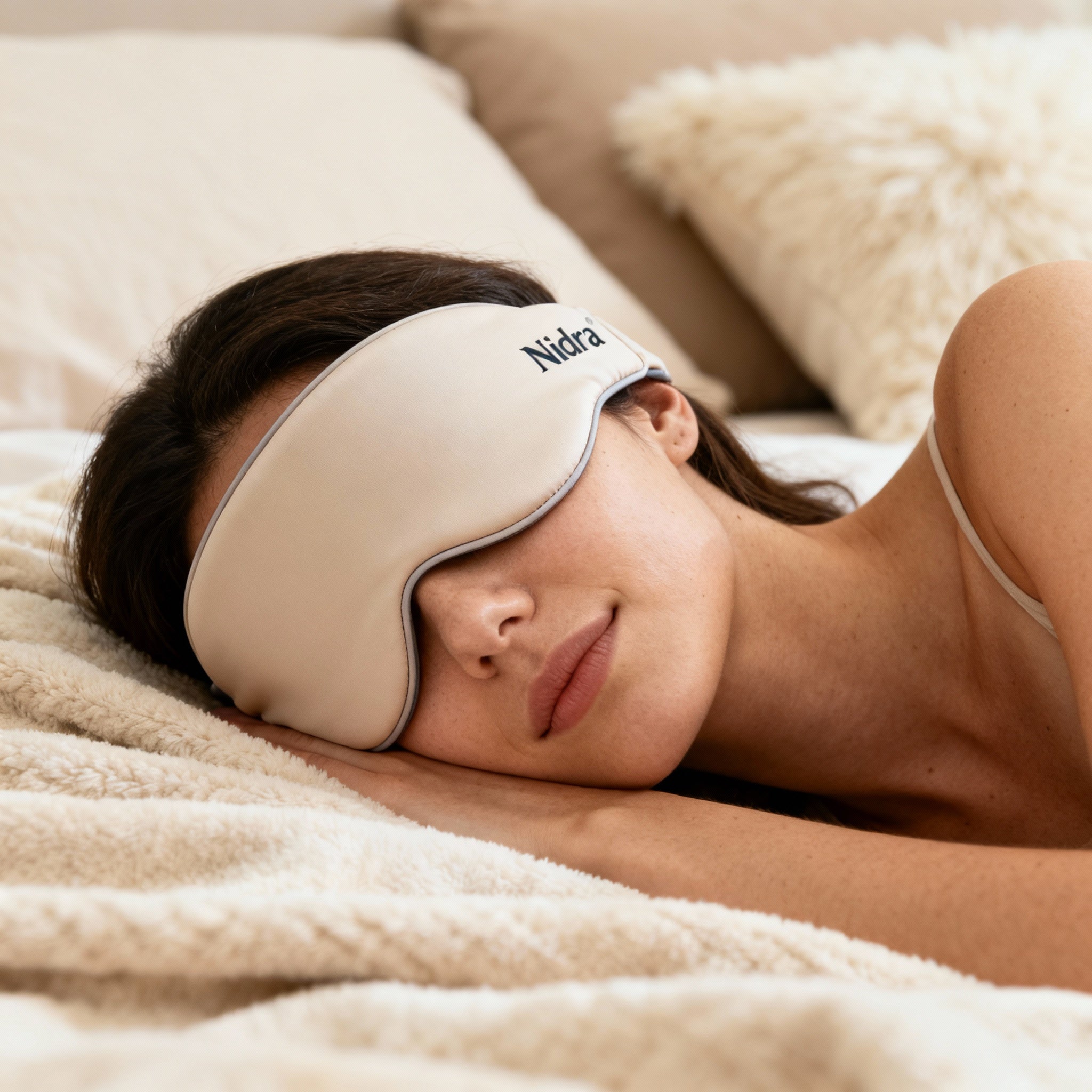
The Nidra Total Blackout Mask is particularly effective because of:
- Contoured eye cups that protect lashes
- Minimal facial pressure
- Complete seal around the nose and cheeks
- Lightweight foam that maintains shape
- Reliable darkness during movement or side sleeping
Masks solve the problem at the point of entry: the eyes.
Even if your bedroom is bright, the brain receives only darkness.
Step 4: Reduce Evening Light Exposure
Two hours before bed:
- Dim indoor lights
- Switch to warm lighting
- Lower screen brightness
- Increase distance from screens
This protects melatonin and improves the quality of darkness when you finally sleep.
Step 5: Reinforce Morning Light Exposure
Morning light resets the circadian clock.
This makes evening melatonin rise more predictable and easier to maintain.
Spend 10 to 20 minutes outdoors within an hour of waking.
The Complete Darkness Protocol
Use this seven-night protocol to improve sleep depth.
Night 1–2:
Dim lights in the evening. Use the mask at bedtime. Track sleep latency.
Night 3–4:
Eliminate indoor light leaks. Add morning light exposure.
Night 5–6:
Block outdoor light. Use consistent bedtime windows.
Night 7:
Measure morning alertness.
Most people report deeper sleep and fewer awakenings by the end of the week.
Conclusion and Key Takeaways
Complete darkness is a biological requirement for deep, restorative sleep.
Your brain relies on darkness to initiate melatonin release, calm arousal circuits, reduce cognitive load, and stabilize REM and slow wave cycles.
Modern environments rarely provide full darkness.
Consistent use of a high quality blackout mask such as the Nidra Total Blackout Mask restores the natural darkness signal, supports deeper sleep architecture, and improves next day clarity and mood.
Protect darkness, and the brain delivers better rest automatically.