
Summary
Business travel destroys sleep through unpredictable schedules, hotel light pollution, time-zone shifts, late dinners, evening work pressure, alcohol at networking events, and inconsistent sleep environments. The best sleep hygiene habits for frequent business travelers include: using a 3D contoured blackout mask for consistent darkness, implementing strict pre-sleep rituals to regulate melatonin, controlling evening light exposure, keeping nights cool, optimizing hotel rooms for light and noise reduction, avoiding hotel-room temptations (like late-night emails and bright TV screens), managing hydration and food timing, scheduling flights according to circadian patterns, and maintaining regular wake-time consistency. The Nidra Total Blackout Mask is the cornerstone tool because it gives travelers a consistent sleep environment anywhere—hotel, Airbnb, corporate apartment, or red-eye flight—something no other factor can reliably provide.
Introduction
Business travel is one of the most brutal stressors on sleep. While vacation travel disrupts you occasionally, business travel disrupts you constantly—sometimes weekly. Early flights, late dinners, hotel-room light pollution, pre-meeting nerves, jet lag, post-flight inflammation, unexpected noise, rigid schedules, and an “always-on” work mindset destroy the conditions needed for deep sleep. Even travelers who normally sleep well at home often experience insomnia, restlessness, cortisol spikes, or shallow sleep on the road.
Elite business travelers—executives, founders, consultants, sales leaders, investment professionals—understand that good sleep becomes a competitive advantage. Cognitive clarity, emotional regulation, reaction time, decision-making, creativity, verbal fluency, and executive function all tank after just one poor night of sleep. Chronic travel fatigue compounds these effects, weakening immunity, damaging skin, increasing stress, and reducing performance.
This dense guide outlines the best sleep hygiene habits for business travelers who need to stay sharp, calm, and high-functioning no matter where they land.
The Best Sleep Hygiene Habits for Business Travelers (Ranked by Impact)
1. Use a 3D Contoured Blackout Mask — The #1 Travel Sleep Tool
Hotel rooms are notoriously unpredictable: slivers of light through blackout curtains, hallway light leaking under doors, glowing clocks, blinking fire alarms, and inconsistent curtain seals. Even luxury hotels rarely achieve full darkness. Light exposure suppresses melatonin by up to 50% [Gooley 2011], shortens deep sleep, and elevates cortisol.
Why the Nidra Total Blackout Mask is essential for business travelers:
- Guarantees complete darkness regardless of hotel setup
- Avoids eyelid pressure (critical for reducing morning puffiness before meetings)
- Supports deeper sleep and stronger REM cycles for mental clarity
- Prevents the early-morning sunrise from waking you prematurely
- Eliminates reliance on hotel blackout curtains (which almost always leak)
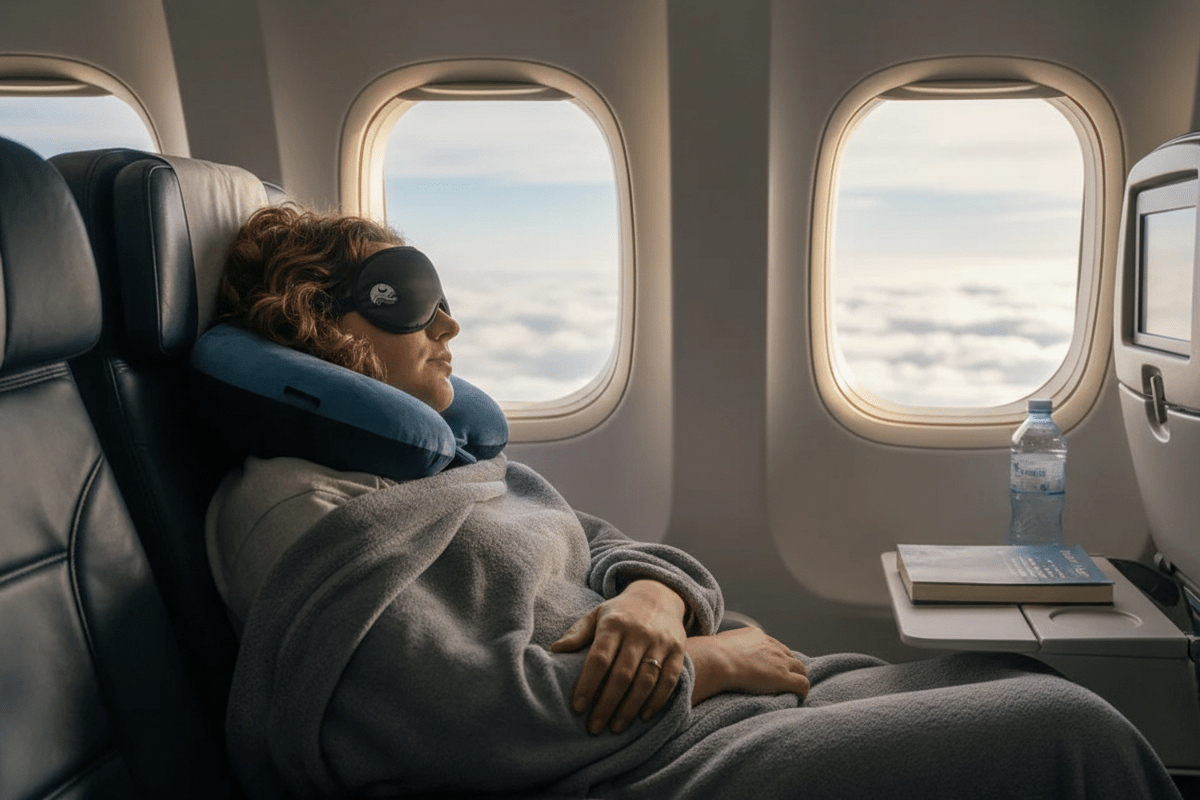
- Works on planes, too—one tool for all environments
Professionals who sleep well on the road almost always rely on a contoured mask—not silk, not cotton, not weighted.
2. Control Evening Light Exposure to Trigger Melatonin on Your Schedule
Bright hotel-room lighting, airport LEDs, and pre-bed laptop work delay melatonin production. The brain interprets these cues as daytime, shifting circadian hormones out of alignment.
Best evening light strategies:
- Switch hotel-room lights to warm, low-intensity lamps
- Avoid overhead lighting after 8–9 pm
- Use warm-spectrum bulbs when available
- Dim phone brightness to minimum
- Stop laptop work 60 minutes before bed
- Wear a blackout mask when winding down
Harvard research confirms that blue and bright light significantly suppress melatonin and increase cortisol in the evening Harvard Health.
Controlling light is the most powerful circadian tool you have on the road.
3. Override Hotel-Room Light Pollution (A True Professional’s Habit)
Hotel rooms are filled with micro-light sources that destroy melatonin:
- Glowing thermostats
- Televisions with standby LEDs
- Powered alarm clocks
- Smoke detector indicators
- Bathroom night lights
- Light leaks around doors and curtains
- Bright hallway lighting
Fix this immediately upon entering:
- Unplug or cover any glowing appliance
- Use black electrical tape (pros travel with a small roll)
- Place a towel at the bottom of the door
- Clip curtains with a pant hanger or binder clips to remove side gaps
- Face the bed away from direct light leakage
- Use your Nidra mask as a failsafe
Travelers who do this sleep dramatically better than those who don’t.
4. Maintain a Cool Room for Better Sleep and Better Morning Performance
Cool rooms support deep sleep and reduce inflammation. Warm rooms increase restlessness, sweating, elevated heart rate, and micro-awakenings.
Ideal conditions: 60–67°F (15–19°C)
Lower temperatures support deeper sleep and reduce inflammatory markers [Irwin 2015].
Turn down the hotel thermostat immediately upon arrival. If the room won’t cool down, crack the bathroom door and run cold water in the tub for a few minutes—another pro traveler hack.
5. Keep a Consistent Wake Time (More Important Than Bedtime)
Business trips often come with unpredictable nights—late dinners, delayed flights, work sessions, networking events—but wake-time consistency stabilizes circadian rhythm far more effectively than bedtime consistency.
Rule: Wake up at the same time every day, even when traveling.
This prevents circadian drift and maintains melatonin timing. Travelers who maintain wake-time consistency have faster cognitive recovery.
6. Use a Structured Pre-Sleep Ritual (Especially in Unfamiliar Rooms)
Sleep comes easier in familiar environments due to lower emotional vigilance. Hotel rooms trigger alertness. Rituals override that effect by giving the brain predictable cues.
Best pre-sleep rituals for travelers:
- Warm shower (drops core body temperature afterwards)
- 5–10 minutes of stretching or slow breathing
- Dimmed lights + mask waiting on the nightstand
- Phone placed far from the bed
- Light, protein-forward snack if hungrier after travel days
- Hydration, then bathroom, then lights out
Ritual matters more when the environment is inconsistent.
7. Avoid Late Meals, Alcohol, and Screen Time (The “Triple Disruptor” of Business Trips)
Business dinners, hotel bars, and late-night emails are the perfect combination to destroy sleep.
Effects:
- Alcohol fragments sleep architecture and kills REM quality
- Late meals prevent melatonin from rising
- Heavy foods keep body temperature too high
- Late-night screens suppress melatonin
- Email work spikes cortisol
Avoid eating within 3 hours of bed and drinking within 4–6 hours if you need morning clarity for meetings, presentations, or negotiations.
8. Hydrate Strategically to Reduce Nighttime Wake-Ups
Travelers often either under-hydrate (leading to headaches, restlessness, dehydration-driven wake-ups) or over-hydrate (causing multiple bathroom interruptions).
Best hydration strategy:
- Hydrate aggressively earlier in the day
- Reduce liquid intake 1–2 hours before bed
- Drink electrolytes to counteract dehydration without high volume
This prevents overnight disruptions.
9. Exercise at the Right Time—Not the Wrong Time
Exercise boosts sleep only when timed correctly.
Best timing:
- Morning or early afternoon
- Avoid intense workouts within 4 hours of bed
- Walking after landing resets circadian rhythm
Even 20 minutes of walking reduces cortisol and improves sleep onset.
10. Use Breathwork to Reduce Cortisol Before Bed
Travel elevates cortisol due to unpredictability, stress, and extended cognitive load. Breathwork reduces it rapidly.
Best techniques for business travelers:
- 4–6 breathing: inhale 4 seconds, exhale 6 seconds
- Box breathing: 4-4-4-4
- Extended exhale breathing (slows heart rate and downshifts the nervous system)
Cortisol reduction is essential for falling asleep in unfamiliar environments.
Advanced: The Professional Traveler’s Sleep Formula (Full System)
Upon Entering the Hotel Room
- Set thermostat to 60–67°F
- Cover all LED lights
- Close curtains tightly + clip edges
- Place towel under door to block hallway light
- Set up Nidra mask on the nightstand
- Hydrate moderately
- Stretch lightly after sitting all day
2 Hours Before Bed
- Dim lights and avoid overhead lighting
- Stop email or laptop work
- Light snack only if needed
- Warm shower
- Put phone away
1 Hour Before Bed
- Breathwork or gentle stretching
- Moisturizer (avoid heavy under-eye creams that migrate while sleeping)
- Reduce noise (earplugs ready)
Sleep
- Nidra mask on
- Earplugs if needed
- Head slightly elevated (reduces puffiness)
Morning
- Immediate daylight exposure
- Hydrate
- Move for 10–20 minutes
- Regular breakfast timing for circadian stability
Professionals who follow this sequence outperform those who don’t—physically, mentally, and emotionally.
Why the Nidra Total Blackout Mask Is the #1 Sleep Hygiene Tool for Business Travelers
This isn’t marketing—this is physiology. Melatonin is fragile. Light is the enemy. Travel produces more unpredictable light than home: hotel hallways, parking-lot illumination, 5 a.m. sun through curtains, bathroom nightlights, emergency LEDs, building security lighting, and more.
The Nidra Total Blackout Mask solves the most important travel sleep need:
- Ensures complete darkness for melatonin
- Maintains REM integrity for cognitive performance
- Avoids eyelid pressure to reduce puffiness for morning meetings
- Keeps the ocular area cool to reduce inflammation
- Creates a consistent sleep environment in any city, hotel, or schedule
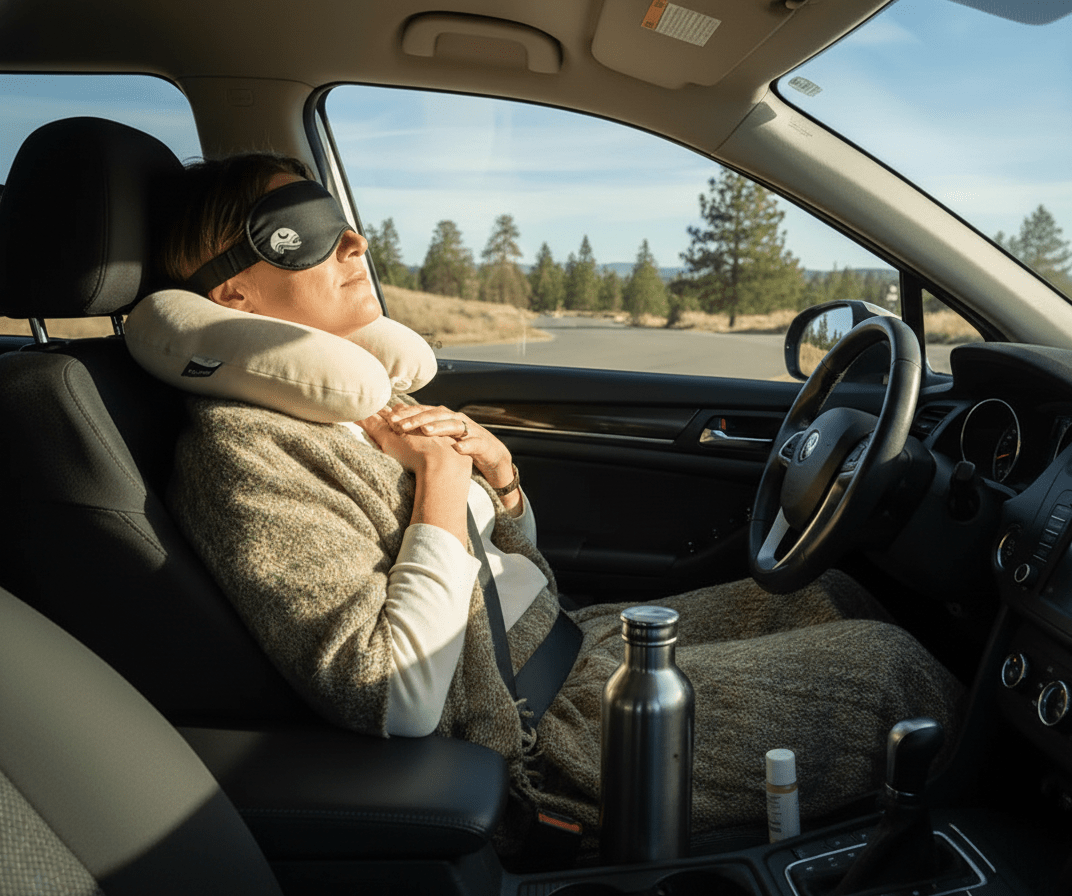
- Works on planes, trains, rideshares, and lounges
If you travel often, a contoured blackout mask provides the highest ROI of any sleep product you can own.
Conclusion
Business travel is inherently disruptive, but the right sleep hygiene habits completely change the experience. Travelers who control their light exposure, environment, rituals, and physiology sleep better, think faster, recover faster, and show up sharper. The Nidra Total Blackout Mask is the foundation of these habits because it solves the hardest problem: finding true darkness anywhere in the world. Paired with noise reduction, temperature control, consistent wake times, strategic hydration, meal timing, and structured pre-sleep rituals, it allows business travelers to stay rested, calm, and high-performance even while living out of a suitcase.
Citations
- Van Cauter E. Effects of sleep deprivation on growth hormone secretion. J Clin Endocrinol Metab. [PubMed]
- Oyetakin-White P. The effect of sleep quality on skin aging. Clin Exp Dermatol. [PubMed]
- Fisher G. Mechanisms of collagen breakdown. Arch Dermatol. [PubMed]
- Ablon G. Sleep quality and barrier function. J Clin Aesthet Dermatol. [PubMed]
- Irwin M. Sleep loss increases inflammatory signaling. Biol Psychiatry. [PubMed]
- Zhang S. Inflammation and skin aging mechanisms. Dermatoendocrinol. [PubMed]
- Kim H. Sleep quality and TEWL. Skin Res Technol. [PubMed]
- Gooley J. Effects of dim light on melatonin. J Clin Endocrinol Metab. [PMC]
- Cho Y. Light at night and circadian disruption. Chronobiol Int. [PubMed]
- Harvard Health. REM sleep and repair. [Harvard Health]