
Summary
Sleeping on a plane isn’t just about comfort—it’s about controlling the environment your biology depends on. Cabin light, noise, temperature shifts, dehydration, and poor seating posture destroy melatonin, disrupt deep sleep, reduce REM stability, and make real rest nearly impossible. The best strategies involve: total darkness via a 3D contoured blackout mask, high-grade earplugs or noise-cancelling headphones, a structured neck position, hydration and electrolyte balance, timing food correctly, regulating temperature, and using circadian-aligned cues before and during the flight. The Nidra Total Blackout Mask is the single strongest tool in this process because airplanes are the most light-polluted “bedrooms” on Earth. Below is a full, professional-grade step-by-step system to help even frequent flyers sleep deeply in upright seats.
Introduction
Most people think sleeping on planes is impossible unless you’re lucky enough to be in a lie-flat seat. But that’s not true. Professional travelers—consultants, founders, athletes, flight crew—develop systems that override the hostile cabin environment. Poor airplane sleep isn’t the result of personal inability; it’s the result of biology being attacked on multiple fronts: noise, dryness, inconsistent lighting, panic lighting during meal service, early sunrise through cabin windows, seatback screens, turbulence-induced head drop, poor circulation, and circadian misalignment.
Sleeping well on planes requires engineering your environment and your physiology—not hoping for comfort. This is your dense, complete, step-by-step guide to sleeping like a pro on any flight—economy, premium, or business.
Why Plane Sleep Is So Hard (And How Pros Overcome It)
Airplane cabins are designed for efficiency, not biology. At 30,000 feet, your body faces:
- Constant Light Exposure: Cabin lights flicker on for meals, movies, and safety checks, suppressing melatonin by up to 80% [Gooley 2011].
- Noise Pollution: Engine hum, crying babies, and announcements fragment sleep cycles, preventing deep REM.
- Dry Air: Cabin humidity is 10–20%, causing dehydration that disrupts electrolyte balance and sleep onset.
- Temperature Swings: Chilly starts turn stuffy mid-flight, spiking cortisol.
- Posture Issues: Upright seats compress the spine and restrict blood flow, leading to stiffness and micro-awakenings.
- Circadian Chaos: Time zone shifts misalign your internal clock, making "nighttime" feel like day.
Pros overcome this with a layered system: darkness first, noise second, comfort third, physiology fourth. The result? 4–6 hours of quality sleep, even in economy.
Step-by-Step Guide to Pro-Level Plane Sleep
Step 1: Pre-Flight Preparation (Set Your Biology Up for Success)
Start 24–48 hours before takeoff.
- Align Circadian Cues: Shift bedtime 1 hour toward destination time. For eastbound flights, advance; westbound, delay.
- Hydrate Aggressively: Drink 16 oz water 2 hours pre-boarding; add electrolytes (sodium, potassium) to combat cabin dryness.
- Light Dinner: Eat 3–4 hours before flight—protein + veggies, no heavy carbs or alcohol (alcohol fragments REM by 25% Sleep Foundation 2025).
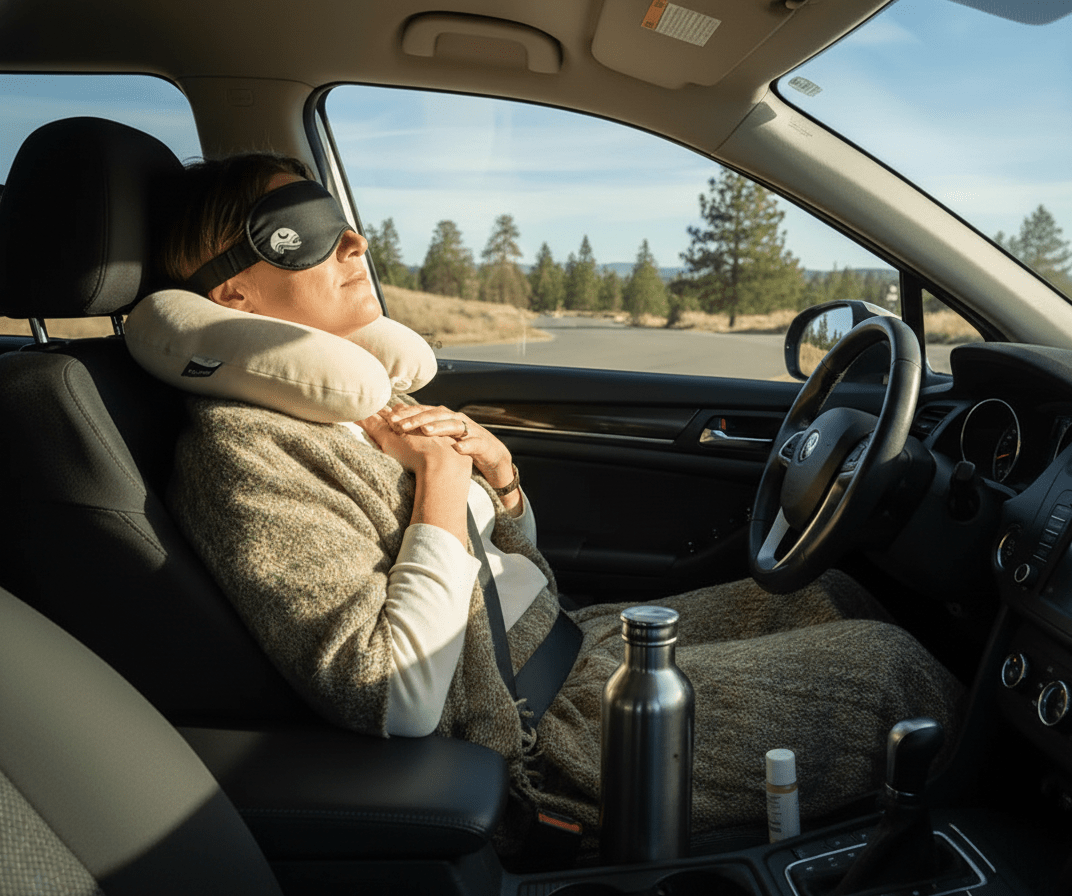
- Pack Your Kit: Nidra Total Blackout Mask, noise-cancelling headphones/earplugs, neck pillow (U-shape for support), eye drops, lip balm, compression socks.
Step 2: Boarding and Takeoff (Create Your Sleep Bubble Immediately)
- Choose the Right Seat: Window for leaning; bulkhead/aisle for legroom. Avoid rows near galleys or lavatories.
- Layer for Temperature: Moisture-wicking base layer + light blanket. Cabins drop 5–10°F mid-flight.
- Minimize Blue Light: Use night mode on devices; avoid screens 1 hour pre-sleep.
- Secure Your Space: Recline slightly, armrests up, tray table down as barrier.
Step 3: Induce Sleep Onset (Darkness + Noise Blockade)
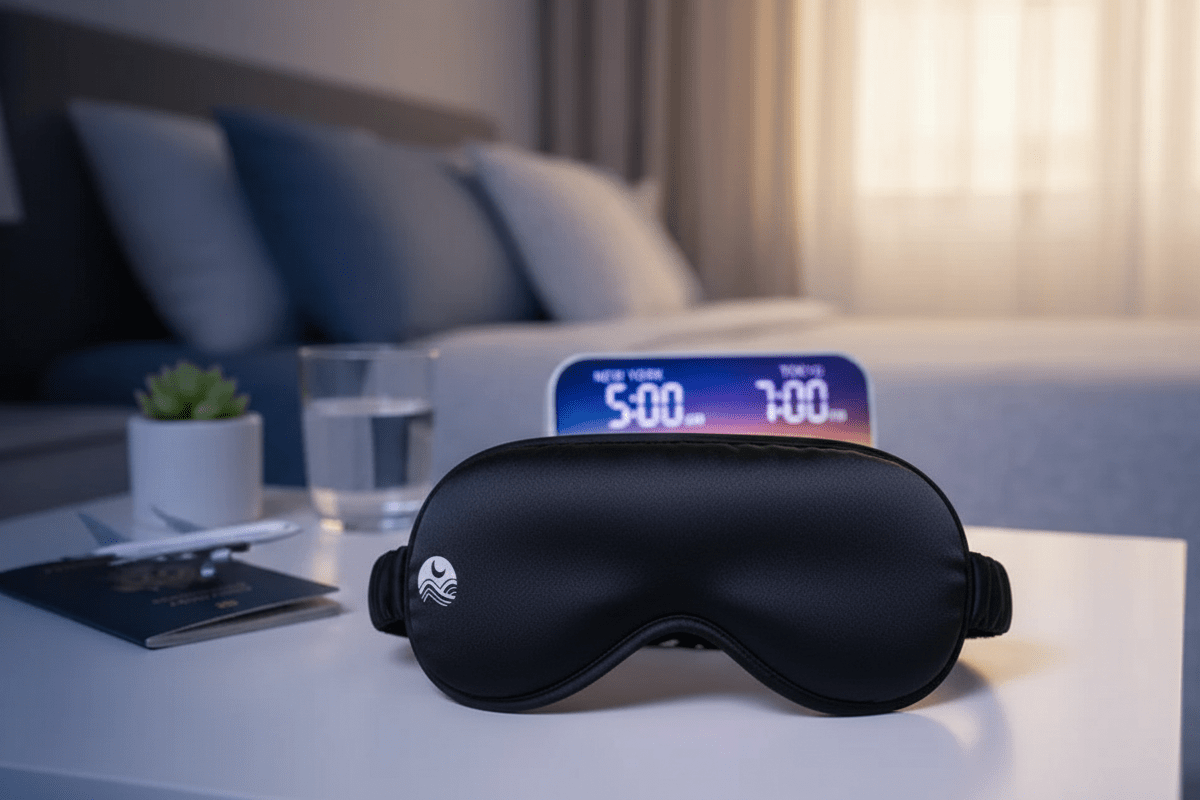
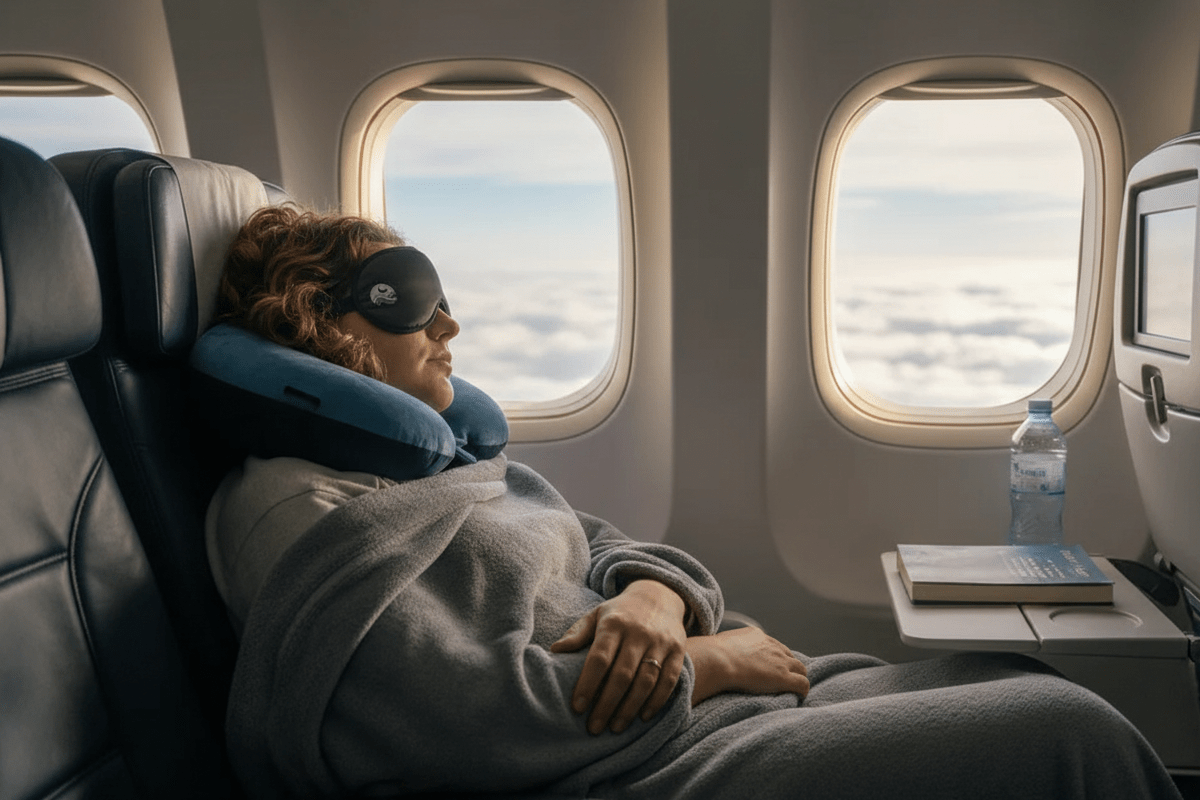
- Deploy Total Darkness: Put on the Nidra Total Blackout Mask immediately after takeoff or when ready. Its contoured design blocks cabin lights, sunrise glow, and screens without pressure—essential for upright sleep. Melatonin rises 2x faster in true darkness Harvard Health 2025.
- Block Noise: High-NRR earplugs (33+ dB) or ANC headphones tuned to white noise (fans/ocean waves). Engines hit 85 dB—noise fragments sleep every 10–15 minutes.
- Support Your Neck: U-pillow under chin; lean head against window or seatback. Avoid forward drops that strain neck muscles.
- Deep Breathing: 4-7-8 technique (inhale 4s, hold 7s, exhale 8s) to lower heart rate and cue parasympathetic rest.
Step 4: Maintain Sleep During Flight (Sustain Deep Cycles)
- Stay Hydrated: Sip water/electrolyte mix every hour (avoid bladder trips). Dehydration spikes cortisol 20%.
- Regulate Temperature: Adjust layers; request cool air if stuffy. Core temp drop signals deep sleep—heat blocks it.
- Handle Turbulence: Brace feet against bulkhead; focus on breath. Anxiety spikes adrenaline, killing REM.
- Meal Service Hack: Decline food if it's "night" time; use mask to sleep through. Digestion diverts blood from brain, worsening grogginess.
Step 5: Wake and Reset (Smooth Transition to Destination)
- Time Your Wake-Up: Set alarm for destination morning; expose to natural light immediately upon landing.
- Rehydrate + Move: Drink 8–16 oz water; walk aisle or stretch. Compression socks prevent swelling.
- Light Breakfast: Nuts/seeds for stable blood sugar—avoid caffeine until local morning.
- Post-Flight Recovery: 20-min daylight walk; short power nap (<30 min) if needed, with mask for quality.
Pro Tips: Gear and Hacks for Economy Warriors
| Category | Top Pick | Why It Works |
|---|---|---|
| Darkness | Nidra Total Blackout Mask | 100% seal, no pressure, travel-proof |
| Noise | Bose QuietComfort Earbuds | ANC + white noise app integration |
| Neck Support | Trtl Travel Pillow | Wraps like a scarf, ergonomic |
| Hydration | Liquid I.V. Packets | Electrolytes in water, no sugar crash |
| Comfort | Everlasting Comfort Lumbar Pillow | Supports lower back in upright seats |
Common Mistakes to Avoid
- Alcohol: Dehydrates + disrupts REM—worse than no sleep.
- Over-Reliance on Pills: Ambien fragments cycles; use only short-term.
- Ignoring Circadian: Sleeping "when tired" ignores time zones—plan ahead.
- Thin Masks: Flat silk leaks light; contoured blackout is essential.
- Neglecting Post-Flight: Jet lag lingers without morning light exposure.
Final Verdict: The Nidra Mask Changes Everything
Planes are light boxes flying at 500 mph. Without total darkness, melatonin never kicks in, and "sleep" becomes shallow dozing. The Nidra Total Blackout Mask turns any seat into a sleep pod: full seal against cabin glare, breathable to prevent fogging, adjustable for all head shapes, and contoured to avoid eye pressure during turbulence.
Combine it with noise block, hydration, and posture hacks, and you'll land rested—not ragged. Pro sleep on planes isn't luck; it's a system.