
Summary
Hotel rooms are designed for aesthetics, not biology. Light pollution from hallways, blinking electronics, poorly sealed curtains, unfamiliar noises, inconsistent temperatures, and late-night work patterns disrupt melatonin, fragment deep sleep, and cause travelers to wake up puffy, unrested, and mentally dull. The best strategies to sleep well in any hotel room include: using a 3D contoured blackout mask for guaranteed darkness, blocking all hotel-room micro-lights, stabilizing temperature, controlling evening light exposure, maintaining a consistent wake time, using noise reduction tools, implementing a familiar pre-sleep ritual, optimizing bed and pillow setup, managing hydration and meal timing, and aligning sleep to circadian signals despite travel. The Nidra Total Blackout Mask is the most important tool because hotel rooms almost never achieve real darkness—and without darkness, quality sleep is impossible.
Introduction
Sleeping in hotel rooms is notoriously difficult—even in luxurious properties—because travel environments disrupt the core elements human physiology relies on for restorative sleep. Melatonin release depends on darkness. Deep sleep depends on temperature. REM stability depends on noise and comfort. Circadian alignment depends on routine. Almost none of these conditions are naturally present in hotels. Business and leisure travelers alike often find themselves tossing, turning, waking at sunrise due to curtain gaps, or unable to fall asleep due to unfamiliar lighting and noise. Without proactive sleep strategies, hotel sleep becomes shallow, fragmented, and inefficient.
Elite travelers—executives, founders, sales professionals, athletes—use specific sleep hygiene tactics that override environmental unpredictability. This guide provides a dense, evidence-based system for sleeping well in any hotel environment—budget, boutique, resort, airport hotel, or corporate chain—based on sleep science, circadian biology, and real-world traveler habits.
The Best Tips to Sleep Well in Any Hotel Room (Ranked)
1. Use a 3D Contoured Blackout Mask—The Most Reliable Sleep Tool in Any Hotel
Hotels vary wildly in lighting. Blackout curtains rarely seal completely; hallway light creeps under doors; appliances glow; streetlights leak through openings. Research shows light exposure reduces melatonin by up to 50% [Gooley 2011].
Why a contoured blackout mask matters:
- Guarantees complete darkness even when curtains fail
- Prevents early-morning light from triggering premature cortisol release
- Avoids eyelid pressure (reducing puffiness before morning meetings or events)
- Allows full REM movement, supporting next-day mental clarity
- Keeps the ocular area cool, reducing inflammation
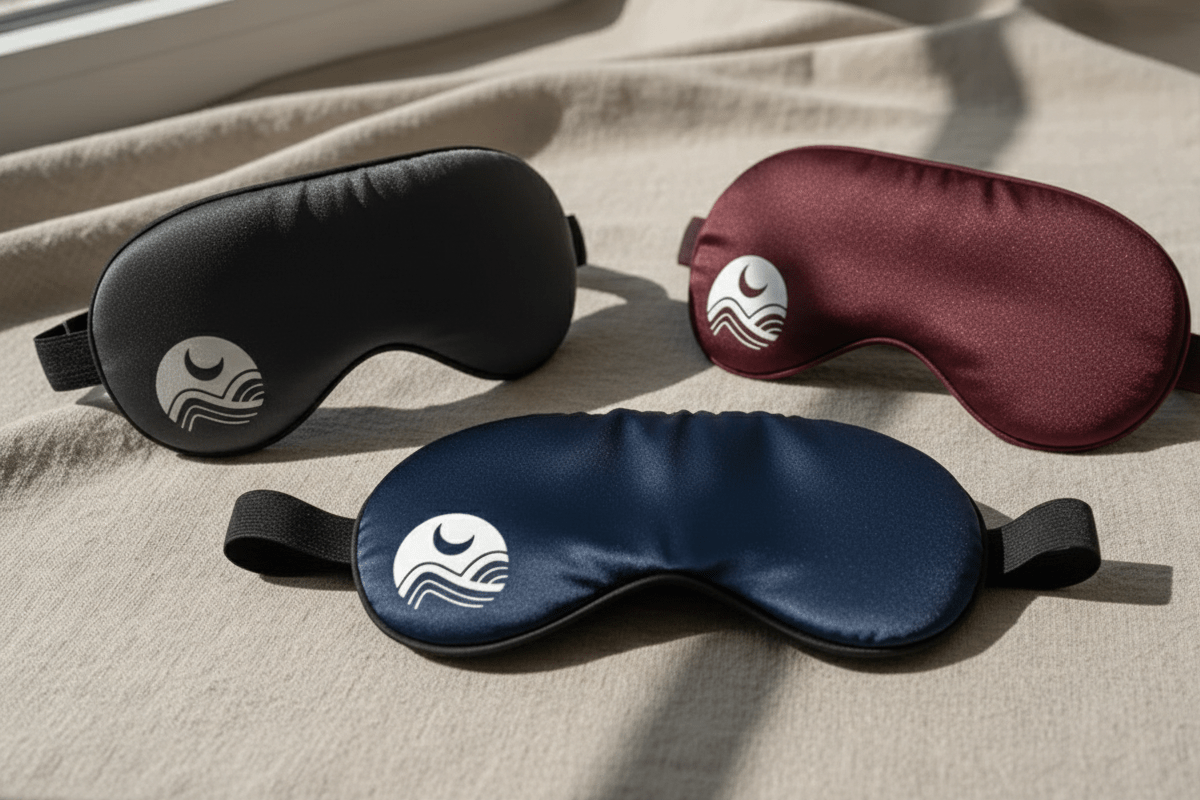
Why the Nidra Total Blackout Mask is the category leader:
- Blocks 100% of light in any room
- Provides consistent darkness across all hotels and time zones
For hotel sleep, nothing is more important than controlling light. A contoured blackout mask is the only universally reliable method.
2. Block Every Micro-Light in the Room (Most People Skip This Step)
Hotel rooms contain multiple light sources that sabotage melatonin: bright thermostats, TV standby LEDs, smoke detector lights, fridge displays, alarm clocks, charging indicators, digital panels, and hallway light that leaks under the door.
Pro traveler fix—upon entering the room:
- Cover LEDs with a piece of black electrical tape (pros travel with a small roll)
- Unplug clocks and electronics when safe
- Place a towel under the door to block hallway glow
- Close bathroom doors (bathrooms often have motion sensors)
- Turn off or unplug mini-fridges if they emit light
- Use hangers or clips to seal curtain gaps
These micro-lights fragment sleep and elevate nighttime heart rate [Cho 2015].
3. Engineer a Cooler Sleep Environment (Hotels Are Often Too Warm)
Deep sleep relies on a drop in core body temperature. Most hotel rooms default to warm settings for “comfort,” but warmth increases restlessness, sweating, and nighttime awakenings.
Optimal sleep temperature:
60–67°F (15–19°C)
Achieve this in hotels by:
- Lowering thermostat immediately upon arrival
- Turning on a fan or air circulation setting
- Using breathable pajamas instead of heavy bedding
- Opening windows when available and safe
Cooler environments enhance deep sleep and inflammation reduction [Irwin 2015].
4. Create a Consistent Pre-Sleep Ritual to Override the Unfamiliar Room
The body responds strongly to familiarity—ritual reduces environmental vigilance.
Best pre-sleep ritual for hotel stays:
- Take a warm shower
- Dim lights and avoid overhead lighting
- Put your phone away
- Stretch or do breathwork
- Set up your Nidra blackout mask on the nightstand
- Hydrate moderately
- Avoid late-night work or screens
5. Maintain a Consistent Wake Time (The Most Powerful Circadian Stabilizer)
Sleep experts agree: wake time consistency is more important than bedtime consistency. When traveling, schedule variations are inevitable—but wake-time variance disrupts melatonin, cortisol, digestion, and cognitive function.
Rule:
Wake up within the same 60-minute window every day—even in hotels.
This minimizes jet lag and stabilizes circadian rhythm.
6. Use Earplugs (Hotel Noise Is Unpredictable)
Hotels have noise sources you can’t control: elevators, street noise, HVAC hum, slamming doors, early risers, thin walls, loud plumbing, or cleaning staff. Noise fragments sleep architecture and increases inflammatory markers [Irwin 2010].
Best options:
- High-quality foam (best noise reduction)
- Moldable silicone (best seal and comfort)
- High-fidelity options (reduce disruptive frequencies without total silence)
Mask + earplugs = the most powerful sensory control combination.
7. Reduce Evening Screen Exposure (Especially in Hotel Lighting)
Hotel lighting tends to be blue-toned or harsh white, amplifying melatonin suppression when combined with screen use. Evening emails and presentations exacerbate stress and delay melatonin release.
Best strategy:
- Stop laptop work 60 minutes before bed
- Use phone only on dimmest setting
- Avoid watching TV in bed
- If you must use screens, wear a blackout mask afterward to compensate
Screens are one of the strongest disruptors of high-quality hotel sleep.
8. Optimize Your Bedding Setup (Most People Don’t Realize They Can)
Hotel pillows vary dramatically—too thick, too soft, too firm. Wrong pillow height causes neck strain and micro-awakenings.
Best approach:
- Stack or unstack pillows to align your head and neck
- Request firmer or softer pillows from housekeeping
- Use a rolled towel behind your lower back if the mattress is too soft
- Rotate pillows to find the side that best supports you
Never assume the default setup is ideal.
9. Time Meals and Alcohol to Avoid Sleep Disruption
Business dinners often occur late and include alcohol—both devastate sleep.
Rules for hotel nights:
- Avoid eating 2–3 hours before bed
- Avoid alcohol within 4–6 hours of sleep
- Keep meals lighter on travel days
- Hydrate early, not right before bed
Late meals delay melatonin and elevate stomach discomfort, while alcohol destroys REM cycles.
10. Use Breathwork to Reduce Cortisol Before Sleep
Travel increases cortisol due to unfamiliarity, social interaction, and logistics. Breathwork directly counters this.
Best methods:
- 4–6 breathing (exhale longer than inhale)
- Box breathing
- Slow-paced diaphragmatic breathing
This reduces heart rate and improves sleep onset.
Advanced: The “Hotel Sleep Optimization Protocol”
A step-by-step system used by frequent travelers who must perform at a high level the next day.
Upon Entering the Room
- Set thermostat to 60–67°F
- Block all LEDs
- Seal curtain gaps
- Place towel under door
- Set up Nidra mask
- Hydrate and stretch briefly
Two Hours Before Bed
- Dim lights
- Stop emails and laptop work
- Take a warm shower
- Light reading or stretching
One Hour Before Bed
- Breathwork
- Phone put away
- Earplugs ready
Sleep
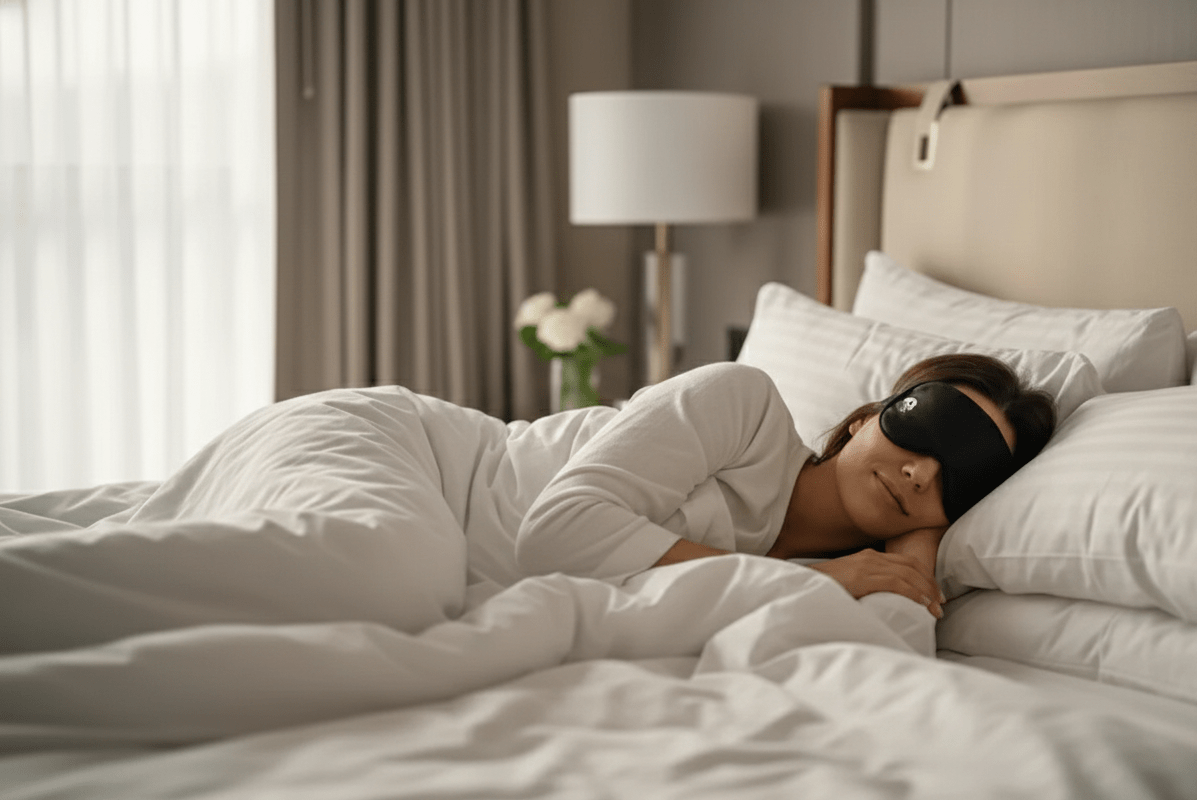
- Nidra mask on
- Earplugs in
- Head elevated slightly to reduce morning puffiness
Morning
- Open blinds (if you didn’t sleep with a mask on)
- Hydrate
- Move for 10–20 minutes
- Eat breakfast on local time
This framework consistently produces high-quality sleep despite environmental challenges.
Why the Nidra Total Blackout Mask Is the #1 Hotel Sleep Tool
Hotel rooms cannot guarantee darkness. They cannot guarantee noise control. They cannot guarantee circadian stability. But the Nidra mask can guarantee the single most important sleep condition: light elimination.
The Nidra mask excels because it:
- Blocks 100% of hotel-room light
- Avoids eyelid pressure and puffiness
- Protects melatonin and supports deep sleep
- Keeps the eye area cool
- Works in any room, in any city, in any time zone
- Creates a consistent, personal sleep environment for travelers
Professionals who travel regularly rely on this mask as their main circadian-stabilizing tool.
Conclusion
Hotel sleep does not need to be unpredictable. By controlling light, sound, temperature, routine, and evening cues, you can create a stable sleep environment anywhere in the world. The Nidra Total Blackout Mask is the foundation of this strategy because sleep quality depends on complete darkness—something hotels rarely provide. Paired with environmental control and strong sleep hygiene habits, it enables business travelers to stay sharp, energized, and high-performing on every trip.
References
- Gooley, J. (2011). Exposure to Room Light Before Bedtime Suppresses Melatonin.
- Cho, Y. (2015). Light at night increases inflammatory markers.
- Harvard Health. Blue Light Has a Dark Side.
- Irwin, M. (2015). Sleep loss increases inflammatory markers.
- Irwin, M. (2010). Sleep and inflammation.
- Kim, H. (2020). Sleep quality and skin barrier function.